
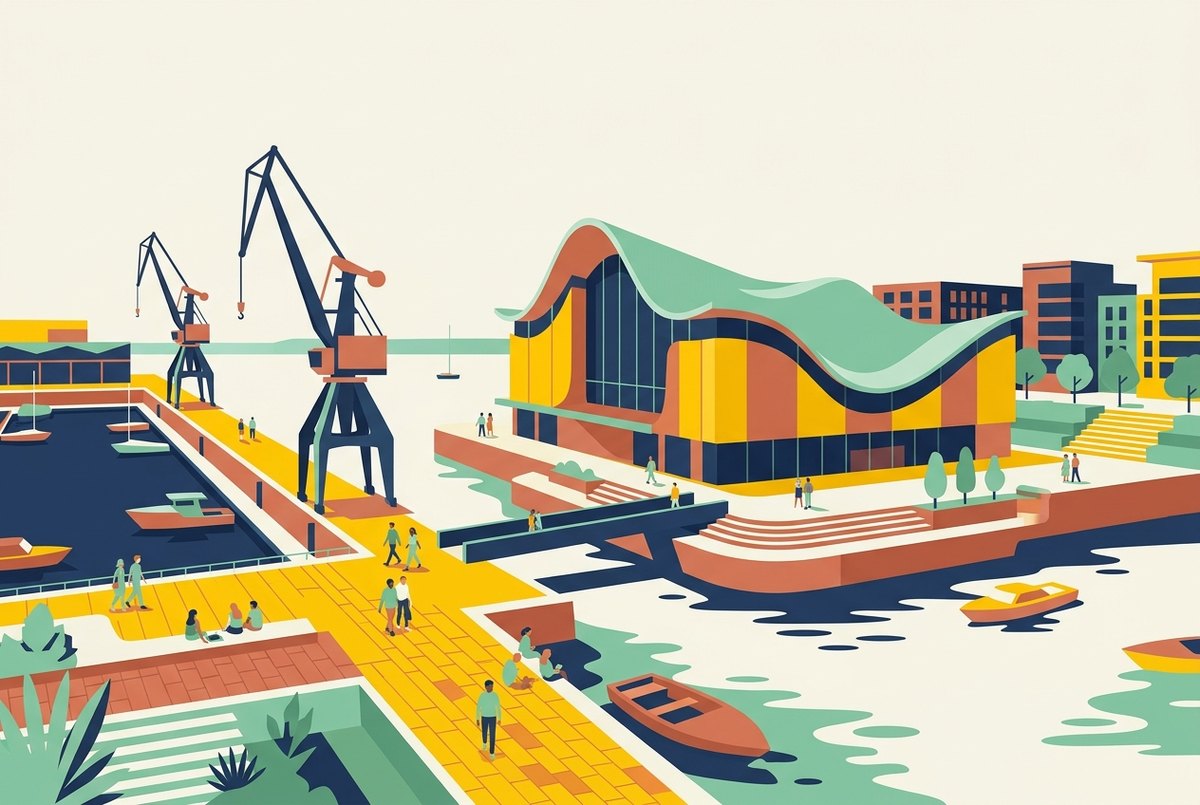
Hamburg's HafenCity project is one of the largest and most renowned examples of urban revitalization in Europe, transforming abandoned port areas into a modern, multifunctional district. This case clearly demonstrates how cities can reclaim access to the water, adapt effectively to climate change, and reimagine post-industrial zones. For Ukrainian cities facing the challenges of large-scale reconstruction and the reorganization of old industrial areas, Hamburg's experience serves as a valuable source of proven urban solutions.
From an Abandoned Industrial Zone to a New City Center
Historically, Hamburg's wealth and development depended on its port on the Elbe River. However, in the second half of the last century, with shifts in logistics technologies and the emergence of large vessels, the old port facilities proved too small. The port had to be relocated further downstream and closer to the sea, leaving a vast area right next to the heart of the city cut off from active life and gradually falling into decay. The municipality faced a dilemma: what to do with a giant, empty industrial zone that effectively tore apart the urban fabric.
Instead of quickly selling off the land for generic commercial development or blanketing it with dormitory neighborhoods, the authorities developed a comprehensive master plan. The core idea was to expand the historic city center by creating a vibrant, full-fledged urban environment. The HafenCity concept is firmly grounded in the principle of multifunctionality. The space is designed to be equally comfortable for living, working, studying, and leisure. Residential complexes of various tiers sit alongside office centers, headquarters of international companies, university buildings, schools, kindergartens, and cultural institutions.
Such a well-balanced mix of functions helped avoid the "ghost town" effect in the evenings or on weekends, a common flaw of purely business districts in many global metropolises. The constant presence of people on the streets stimulates the local economy—cafés, bakeries, restaurants, and small shops on the ground floors of buildings. Moreover, the project is being implemented in phases, neighborhood by neighborhood, allowing the city to analyze missteps and adjust the planning of subsequent zones in response to society's evolving needs.
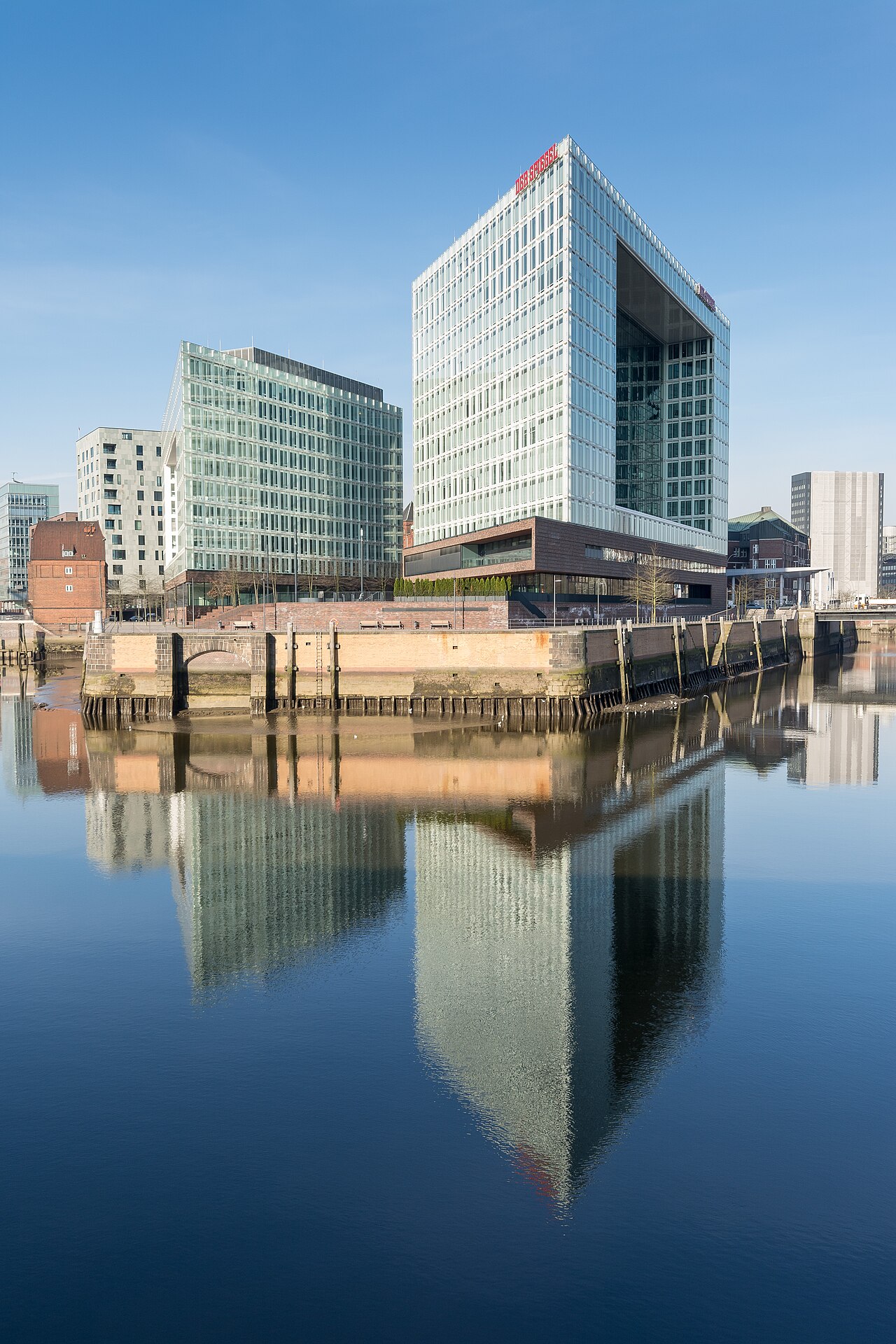
Climate Resilience and New Life on the Water
Because HafenCity is located directly by the river in an area prone to flooding during storm surges on the Elbe, safety and climate resilience were among the key engineering challenges. The traditional solution in such cases is building high, massive protective dikes. However, this approach would have completely cut the new district off from the water, severed the visual connection to the river, and stripped the project of its primary asset. Hamburg chose a much more complex yet innovative path.
Instead of a general perimeter dike enclosing the district, the buildings and streets themselves were constructed on artificially elevated plinths, reminiscent of traditional German dwelling mounds. Residential, commercial, and office spaces begin at a safe elevation that water cannot reach even during the most severe storms. Meanwhile, the lower levels are primarily allocated for underground parking or utility areas fitted with watertight gates, which can easily be secured or cleaned up in the event of flooding.
Waterfronts, stepped promenades, and public plazas remain at the lower level, closer to the water. They are intentionally designed to be temporarily inundated without causing any damage to the infrastructure. When the water recedes, these spaces quickly return to normal life. This engineering solution preserved the openness of the space and created unique recreational areas where water acts as an integral element of the urban landscape rather than a hostile force behind concrete walls from which residents must hide.
Prioritizing Sustainable Mobility and Preserving Identity
The transport infrastructure of the new district was shaped with stringent modern environmental standards in mind. The city set a goal to minimize the use of private cars, giving priority to pedestrians, cyclists, and public transit. To seamlessly integrate HafenCity with older parts of Hamburg, a metro line was specially extended, with stations that have become modern architectural landmarks in their own right. An extensive network of bus routes and river ferries was also established. Wide sidewalks and safe bike lanes make active mobility the most convenient way to get around the district.
A crucial factor in the project's success was the sensitive handling of the site's historical memory. HafenCity directly borders Speicherstadt—a massive historic warehouse complex built of distinctive red brick. The new architecture does not attempt to blindly copy the historic buildings, but harmoniously interacts with them by preserving street proportions, facade rhythms, and using similar color palettes and materials.
The true symbol of this urban dialogue between the industrial past and the cultural future is the Elbphilharmonie. This monumental structure with a wave-like glass roof was erected right on top of a massive old brick port warehouse. Today, it is not only a world-class concert hall, but also the signature landmark of the transformed Hamburg, creating a new cultural center of gravity.

Lessons for Ukrainian cities
- Reclaiming waterfronts for residents. Industrial zones near rivers and seas hold immense recreational potential, so revitalizing them allows for the creation of attractive public spaces and opens up unobstructed access to the water.
- Multifunctionality instead of rigid zoning. Combining housing, workplaces, and social and cultural infrastructure within a single neighborhood keeps it vibrant around the clock and significantly reduces the need for daily cross-city commuting.
- Innovative climate adaptation. Instead of constructing solid barriers and high dikes, cities should adopt flexible architectural solutions that allow urban infrastructure to safely coexist with natural elements and temporary flooding.
- Respect for industrial heritage. Old factories, warehouses, or port structures do not necessarily have to be razed to the ground—they can serve as a solid foundation for new community hubs or architectural highlights, preserving the site's unique historical memory.