
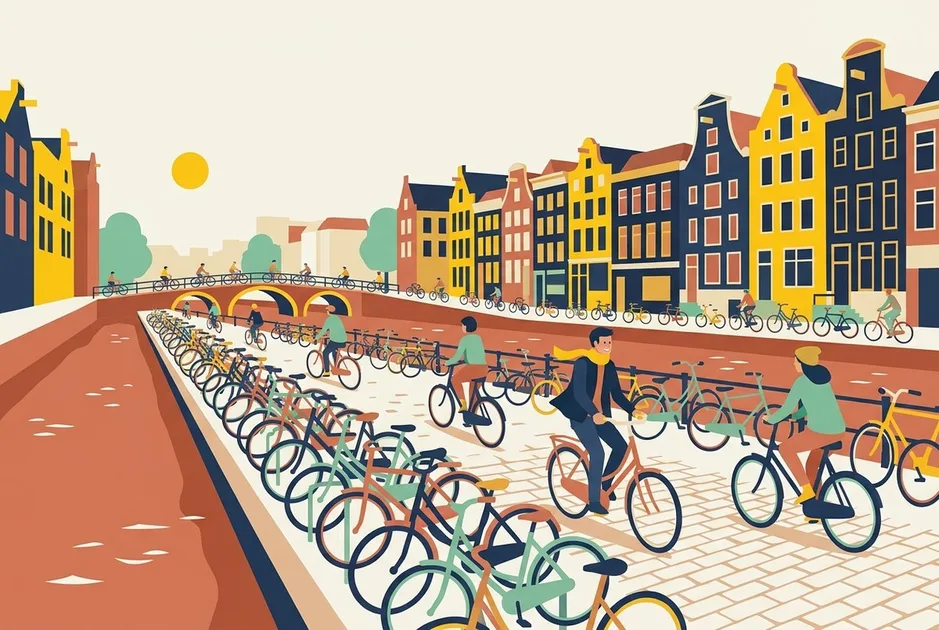
Modern Amsterdam is perceived as the cycling capital of the world, yet just half a century ago, the city was choking on traffic congestion and rapidly turning into a space friendly exclusively to private cars. A radical shift in course occurred thanks to the mass protests of the 1970s, which proved that the transport paradigm could be turned away from car-centricity toward human safety. This historical precedent demonstrates the mechanics of a successful urban transformation, which is crucial for modern Ukrainian cities.
The Car Boom and the Urban Crisis
In the postwar decades, the Netherlands, like most European countries, experienced a period of rapid economic recovery. Rising prosperity led to mass motorization, as owning a car was seen as the primary symbol of progress and personal freedom. Amsterdam's urban planning quickly began adapting to the needs of drivers, disregarding the interests of other road users. Narrow historic streets were widened at the expense of sidewalks, public squares were turned into solid parking lots, and to build new expressways, plans were even made to demolish entire residential neighborhoods and fill in canals.
Urban space became increasingly hostile to pedestrians and cyclists. The cycling culture traditional to Dutch cities began to decline, as riding alongside streams of speeding cars became too dangerous. The consequence of this policy was not only environmental degradation and a loss of urban livability, but also a catastrophic surge in traffic accidents. Thousands of people died on the streets each year, and a significant portion of traffic accident victims were children simply playing near their homes or walking to school. The city found itself on the brink of an infrastructural and social collapse.
Public Resistance and the Oil Crisis
The point of no return came when society realized the price it was paying for the convenience of automobile traffic. In the early 1970s, a powerful grassroots movement emerged in the country, the most famous initiative of which was the "Stop de Kindermoord" (Stop Child Murder) campaign. Activists, including many parents, blocked streets, organized mass bike rides, painted unauthorized pedestrian crossings, and demanded that authorities immediately ensure road safety. People refused to accept that their children were becoming victims of flawed transport planning.
The protest sentiment of city residents coincided with the global oil crisis that erupted during the same period. Due to soaring fuel prices and the threat of shortages, the government was forced to look for ways to reduce the country's energy dependence. Authorities introduced "car-free Sundays," when motorized traffic was halted. On these days, people took to empty highways, rode bicycles, and rediscovered how quiet, clean, and safe their city could be. The synergy of strong public pressure and acute economic necessity forced politicians to radically rethink urban development priorities.
From Protests to Systemic Infrastructure Changes
The shift in Amsterdam's transport policy did not happen overnight; it was a long and systemic process. The government and the municipality started by creating the first experimental protected bike lanes on the most dangerous stretches. Over time, the authorities began deliberately complicating through traffic for cars across the city center. A new traffic circulation system was introduced: streets were made one-way for cars, physical barriers were installed to force drivers to take detours, while preserving direct and convenient routes for cyclists.
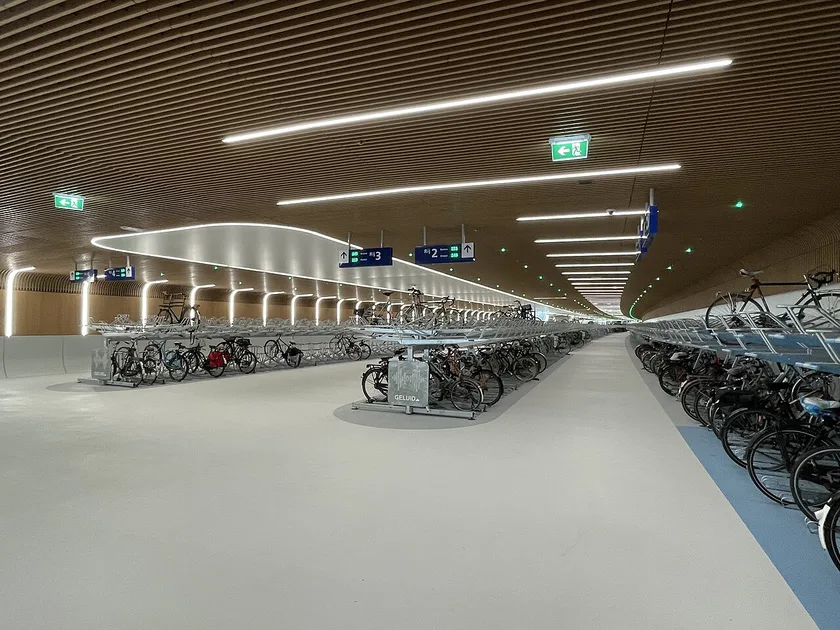
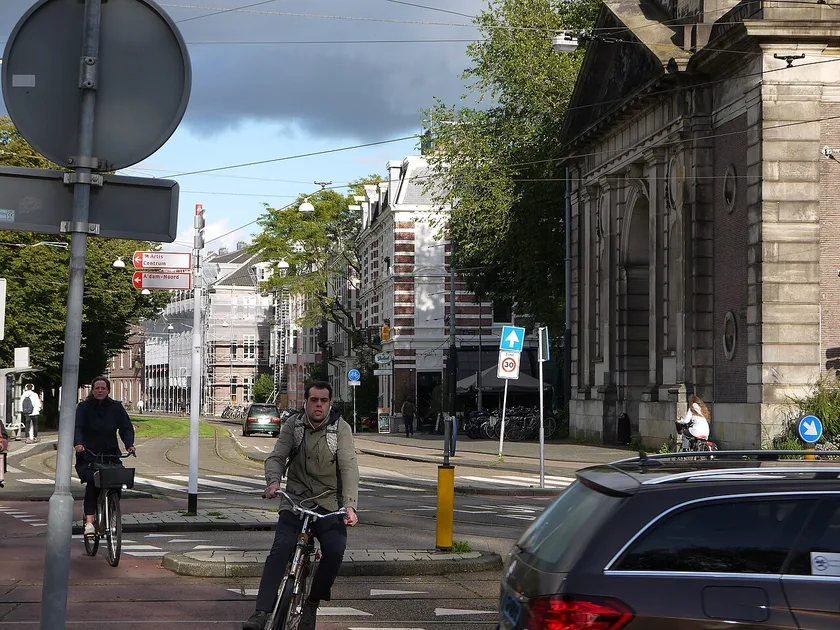
The city began extensively implementing traffic calming measures. Roadways were narrowed, intersections were raised to the level of sidewalks, and speed limits were substantially lowered in residential areas. Parking in the center became paid and expensive, and the space reclaimed from asphalt was dedicated to green spaces, outdoor seating, and public areas. Over several decades of consistent work, Amsterdam built a continuous and safe cycling network used today by residents of all ages. Cars did not disappear from the city entirely, but they ceased to be the dominant mode of transport.
Lessons for Ukrainian cities
- Safety as the primary criterion for change. The reorganization of urban space must not begin with attempts to defeat traffic jams by adding lanes, but with the necessity of saving human lives. The priority must always be the safety of the most vulnerable road users—pedestrians, children, and elderly residents.
- Transformation requires time and consistency. Amsterdam did not become a livable city in a single year, so Ukrainian municipalities should develop long-term mobility strategies. Changes should be implemented step by step, starting with tactical urbanism methods and the creation of pilot safe routes.
- Political will relies on community demand. Large-scale infrastructure changes are only possible when an active portion of society clearly articulates its needs. Residents must be prepared to unite and advocate for their right to a clean and comfortable environment.
- Crisis as a window of opportunity. Just as the 1970s oil crisis accelerated positive changes in the Netherlands, modern challenges can serve as a catalyst for Ukraine. Post-destruction recovery and the need for energy independence present an ideal moment to abandon car-centric planning in favor of sustainable mobility.