
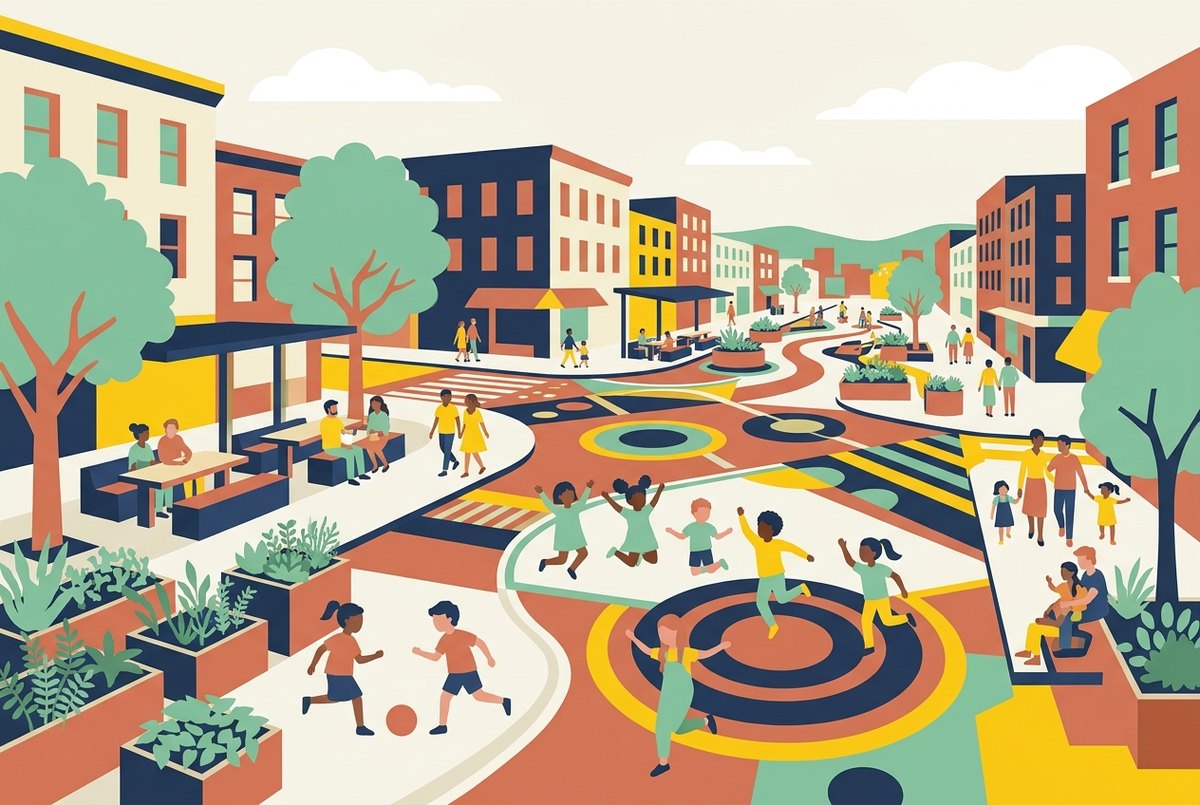
The concept of "superblocks" (super-illes) in Barcelona is one of the most famous modern examples of how a metropolis can radically shift priorities by reclaiming space from cars in favor of pedestrians. By combining several standard city blocks into a single area with restricted traffic, the city effectively addresses issues of air pollution, excessive noise, and a lack of green spaces. This case proves that even densely built-up areas can be successfully adapted to modern comfort requirements without resorting to large-scale demolitions or expensive overhauls of basic infrastructure.
From Idea to a New Urban Geometry
Barcelona is famous for its unique street grid, laid out in the second half of the nineteenth century by engineer Ildefons Cerdà. The Eixample district, with its ideal square blocks and chamfered corners, was created to ensure equality, proper sunlight exposure, and ventilation. However, with mass motorization, this structure turned into a continuous network of transit thoroughfares. Nearly every street became a throughway, leading to critical levels of air pollution, noise, and a lack of safe space for walking.
To solve this problem, local urban planners proposed a simple yet effective spatial model: combining nine standard blocks (in a three-by-three grid) into one large "superblock." Through-traffic, public transit routes, and heavy truck logistics are directed exclusively around the outer perimeter of this unit. In contrast, the interior streets become shared spaces where priority belongs entirely to pedestrians and cyclists. Residents' cars, local delivery services, and emergency vehicles can enter, but their speed is significantly restricted, and cut-through traffic is made impossible through clever changes in traffic directions. Former intersections inside the superblock, which were once entirely asphalt-covered junctions, are transformed into new public squares, playgrounds, and green plazas.
Tactical Urbanism and Overcoming Resistance
A transformation of this scale naturally could not occur without public debate and conflict. During the launch of the first pilot superblocks, the municipality faced noticeable resistance from some local residents, motorists, and local businesses. Entrepreneurs feared that restricting vehicular access would scare away potential customers, while drivers complained about complicated everyday routes and the inevitable loss of curbside parking spaces.
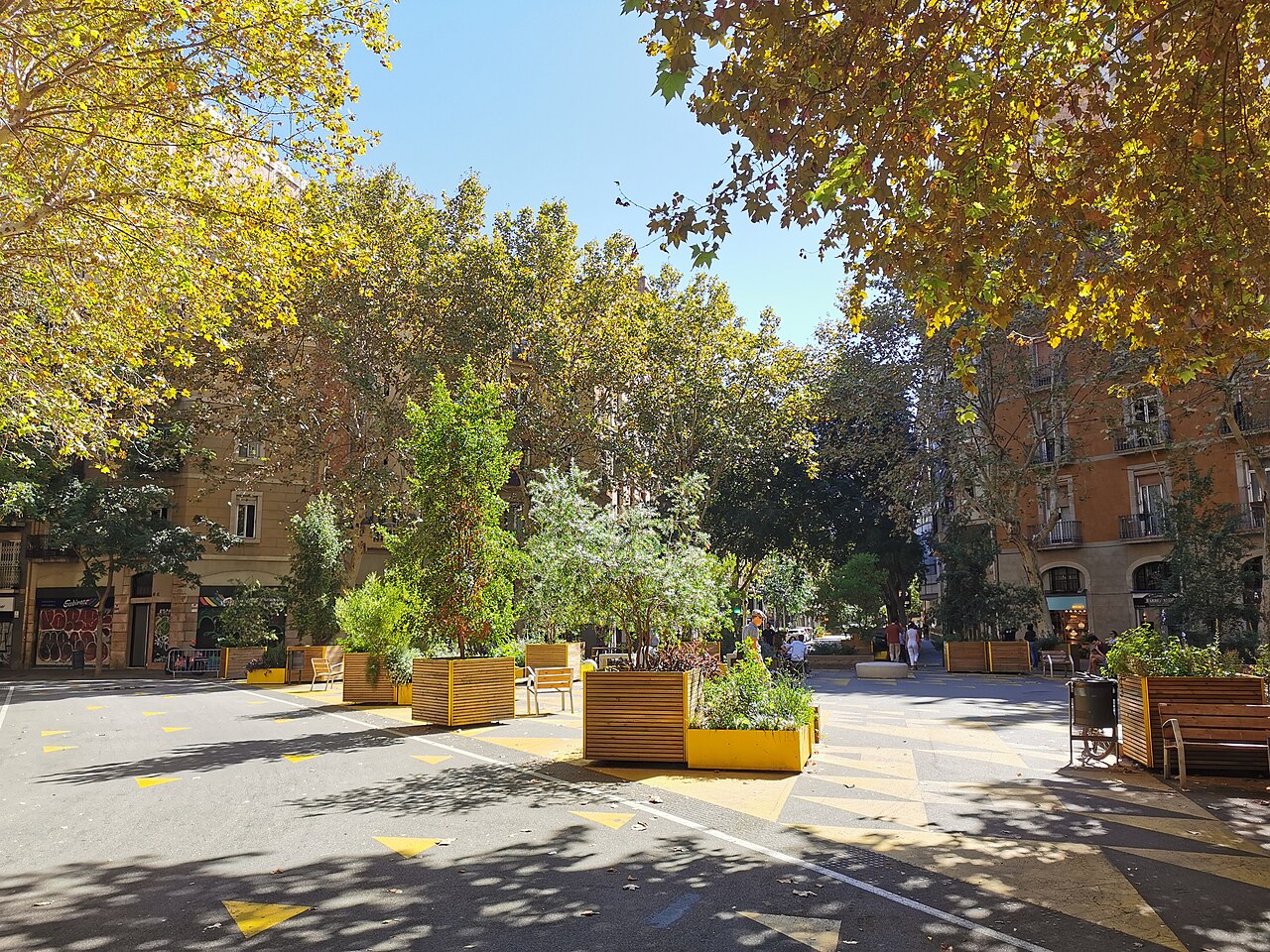
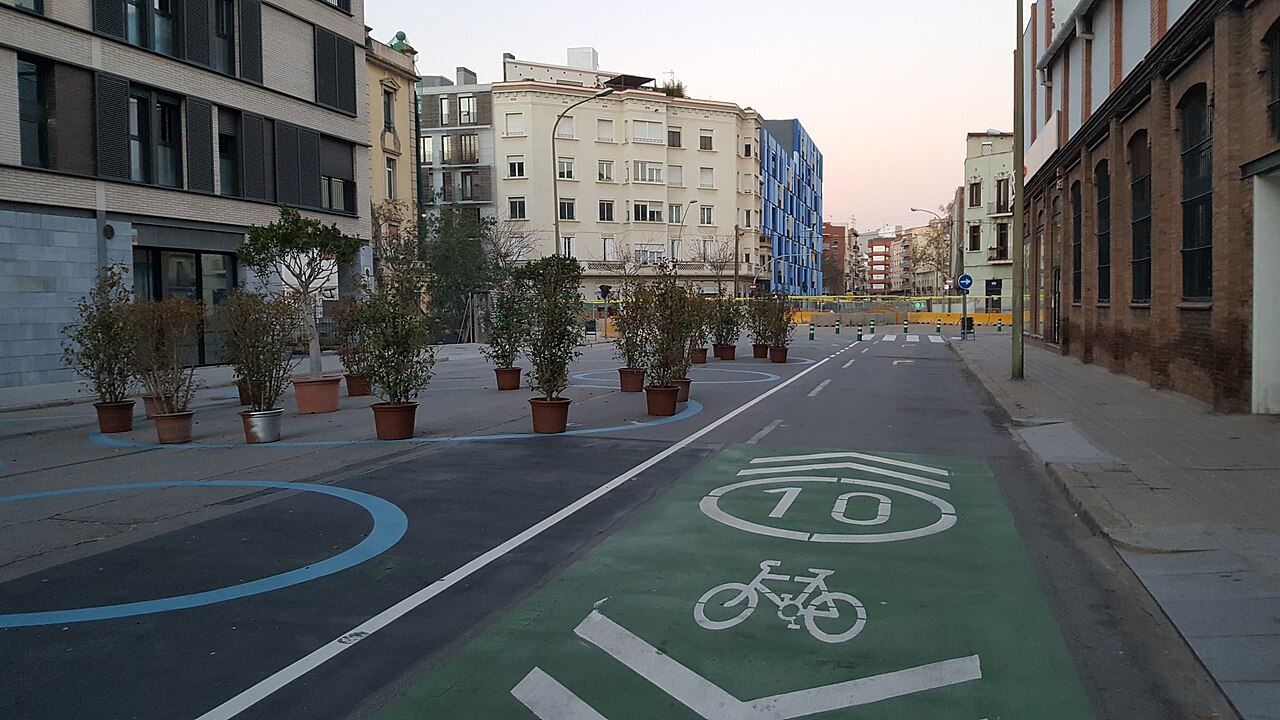
To minimize risks and ease social tensions, Barcelona applied the method of tactical urbanism. Instead of immediately launching major construction projects involving the overhaul of underground utilities and the removal of curbs, the city utilized temporary, flexible solutions. Streets were closed to through-traffic using bright paint on the asphalt, large planters with trees, concrete half-spheres, and movable street furniture. This allowed for quick and low-budget testing of the new traffic scheme under real conditions. Residents were able to see firsthand the benefits of a quiet, safe yard outside their windows, while businesses gradually realized that increased pedestrian foot traffic had a positive effect on customer numbers in cafes and shops. Only after successful testing and incorporating community feedback did permanent capital reconstructions begin to replace the temporary solutions.
Environmental and Social Results
The gradual scaling up of the superblock network yielded noticeable results that fundamentally transformed Barcelona's urban environment. The first and most obvious consequence was a significant reduction in traffic noise and an improvement in air quality within the reorganized blocks. The space freed from excessive asphalt allowed for an increase in unpaved ground areas and greenery, which is crucial for a southern city in the context of global warming and combating the "urban heat island" effect.
In addition to the environmental impact, superblocks became a powerful catalyst for revitalizing social interaction. Streets ceased to be merely transit corridors and reclaimed their role as vibrant public spaces. The new squares introduced quiet relaxation areas and safe zones for children's games, while outdoor seating for local dining establishments expanded. People began spending more time outdoors and interacting with neighbors, which significantly strengthened local communities. Barcelona's experience clearly demonstrated that curbing car-centricity does not paralyze a metropolis, but instead makes it more resilient, healthy, and livable.
Lessons for Ukrainian cities
- Testing through tactical urbanism: Before implementing expensive major overhauls, it is worth using temporary solutions (paint, street furniture, planters) to test traffic models and demonstrate the future outcome to residents in practice.
- Communication and managing resistance: Any restriction on private vehicular traffic will face initial pushback, so maintaining continuous dialogue with businesses and residents is critical, relying on objective data regarding safety, ecology, and foot-traffic growth.
- Separating transit from daily life: The logic of superblocks can be successfully adapted to Ukrainian realities (for instance, in residential neighborhoods or historic centers) by routing through-traffic along wide arterials and calming traffic within residential zones.
- Reclaiming streets for people: Reimagining urban space—where redundant asphalt intersections and overly wide roadways are converted into mini-parks—is an effective and relatively inexpensive tool for creating a comfortable urban environment.