
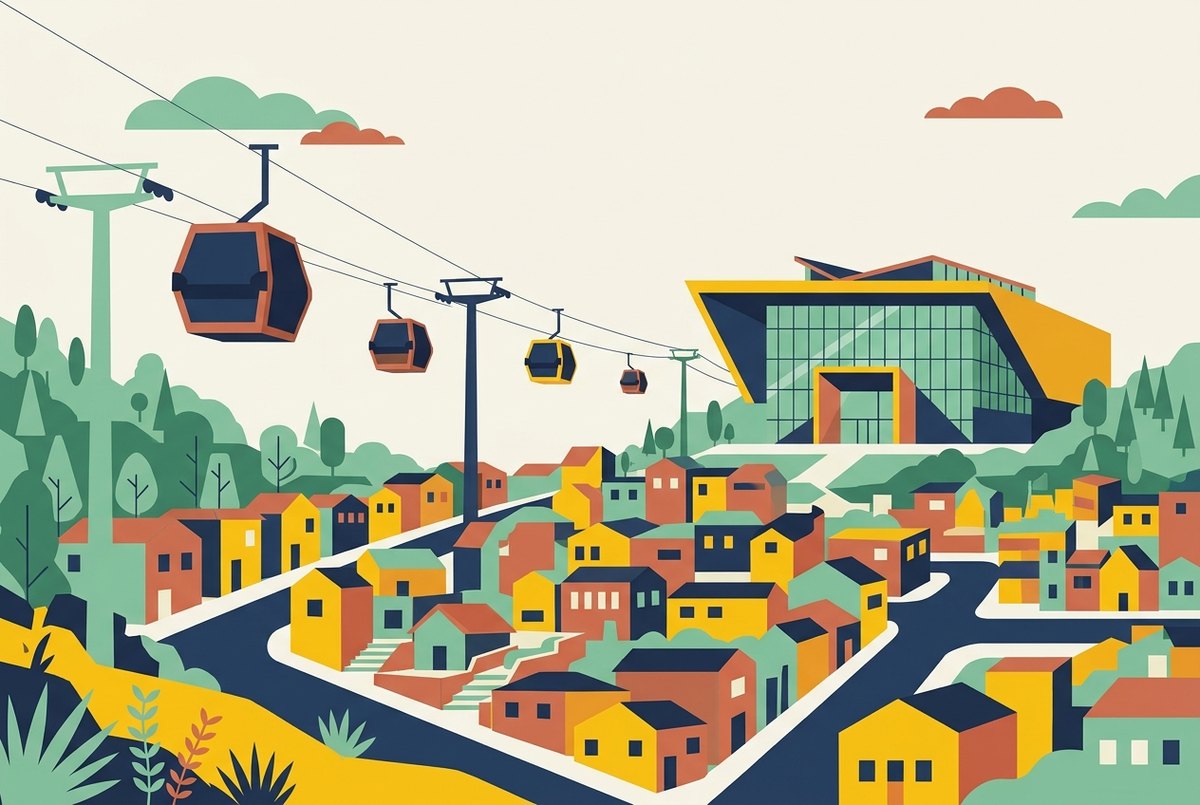
The experience of Colombia's Medellín is a classic example of how a city once considered the most dangerous in the world managed to overcome a profound crisis by changing its approach to urban planning. This case demonstrates that investing in basic infrastructure, transport accessibility, and high-quality public spaces can not only transform the physical appearance of distressed neighborhoods, but also significantly reduce crime rates and restore residents' trust in institutions.
The Philosophy of Social Urbanism
Medellín’s transformation began in the early 2000s, when local authorities realized that relying solely on forceful methods to fight crime did not yield long-term results. Police raids were replaced by the concept of so-called "social urbanism." The core principle of this philosophy was to direct the best architectural, transport, and infrastructure projects to the city's poorest and most marginalized neighborhoods.
For decades, Medellín was spatially and socially divided. Business, cultural, and relatively safe life bustled in the cozy valley, while slums (comunas) sprawled chaotically across the steep mountain slopes. These areas were effectively beyond state control, ruled instead by drug cartels and local armed groups. The lack of paved roads, schools, hospitals, and basic utilities made these neighborhoods isolated enclaves of poverty.
Social urbanism shifted the paradigm: the city administration began viewing space as a tool for social justice. Instead of walling off troubled areas, the city began stitching together the torn urban fabric, investing in education, culture, and mobility precisely where they were needed most.
Cable Cars as Public Transport
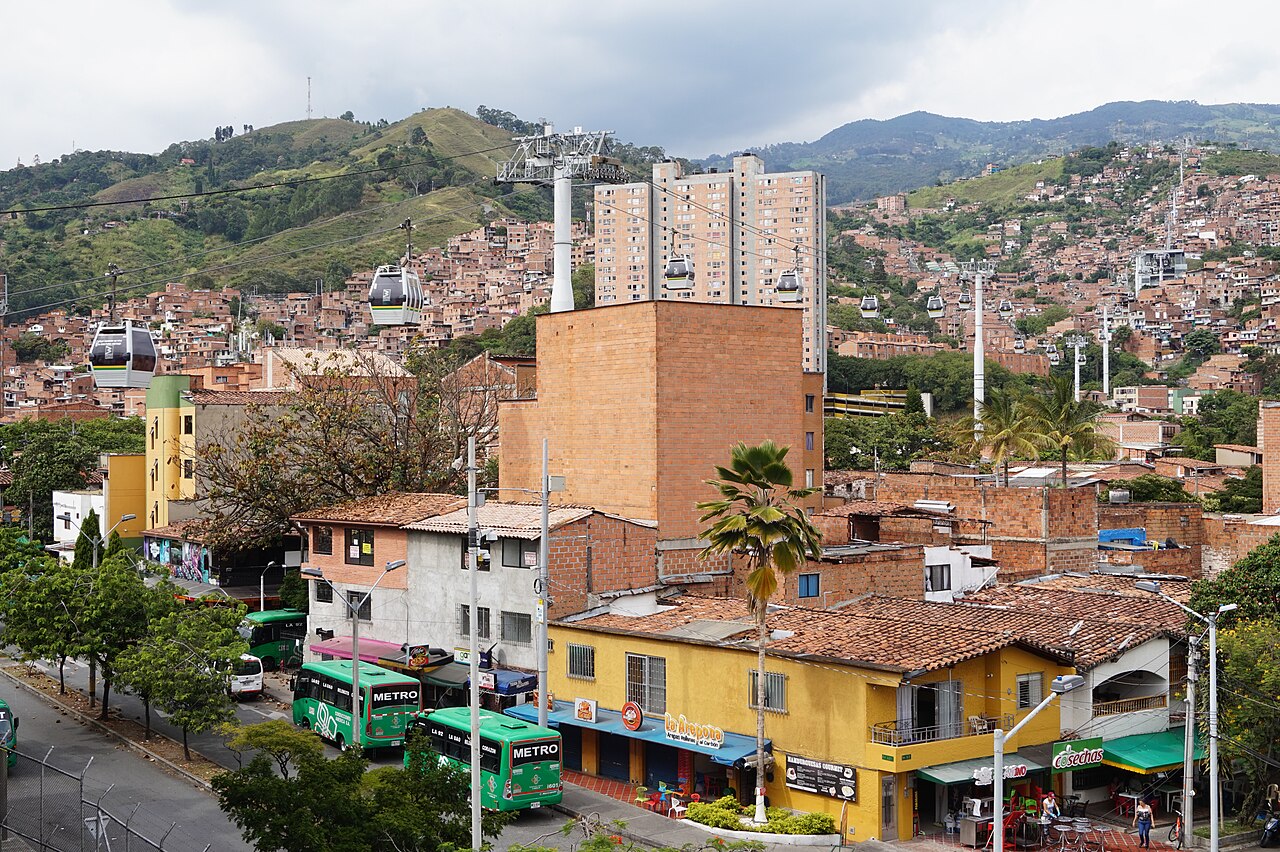
The symbol of Medellín's renewal was the Metrocable system—the world's first cable car network fully integrated into an urban public transit system. Traditionally, cable cars were seen as tourist attractions or transport for ski resorts. However, for Medellín with its extremely challenging topography, it became the ideal engineering solution.
Metrocable lines connected densely populated, impoverished hillside neighborhoods with conventional metro stations in the business center. Previously, the commute to work for comuna residents could take several hours and led through dangerous, crime-ridden areas. With the arrival of the cable cars, travel time was significantly reduced, and fares became affordable thanks to an integrated transfer ticket.
This transit project had a profound social impact. Integration gave slum residents quick access to the legal job market, education, and healthcare. In addition, Metrocable stations became new hubs of activity: legitimate small businesses began developing around them, street lighting was installed, and regular police patrols were introduced, gradually driving crime out of the surrounding streets.
Libraries and Escalators Instead of Checkpoints
Another critically important element of the strategy was creating high-quality public spaces and landmark architectural projects in the poorest neighborhoods. The most famous example of this idea in action is the library parks (Parques Biblioteca). These are modern, architecturally striking, and large-scale buildings that combine the functions of a traditional library, an educational center, a coworking space, art studios, and a safe space for recreation. They were deliberately built with high-quality materials in the epicenters of former turf wars to visually underscore the presence of the state and offer local youth a real alternative to life on the streets.
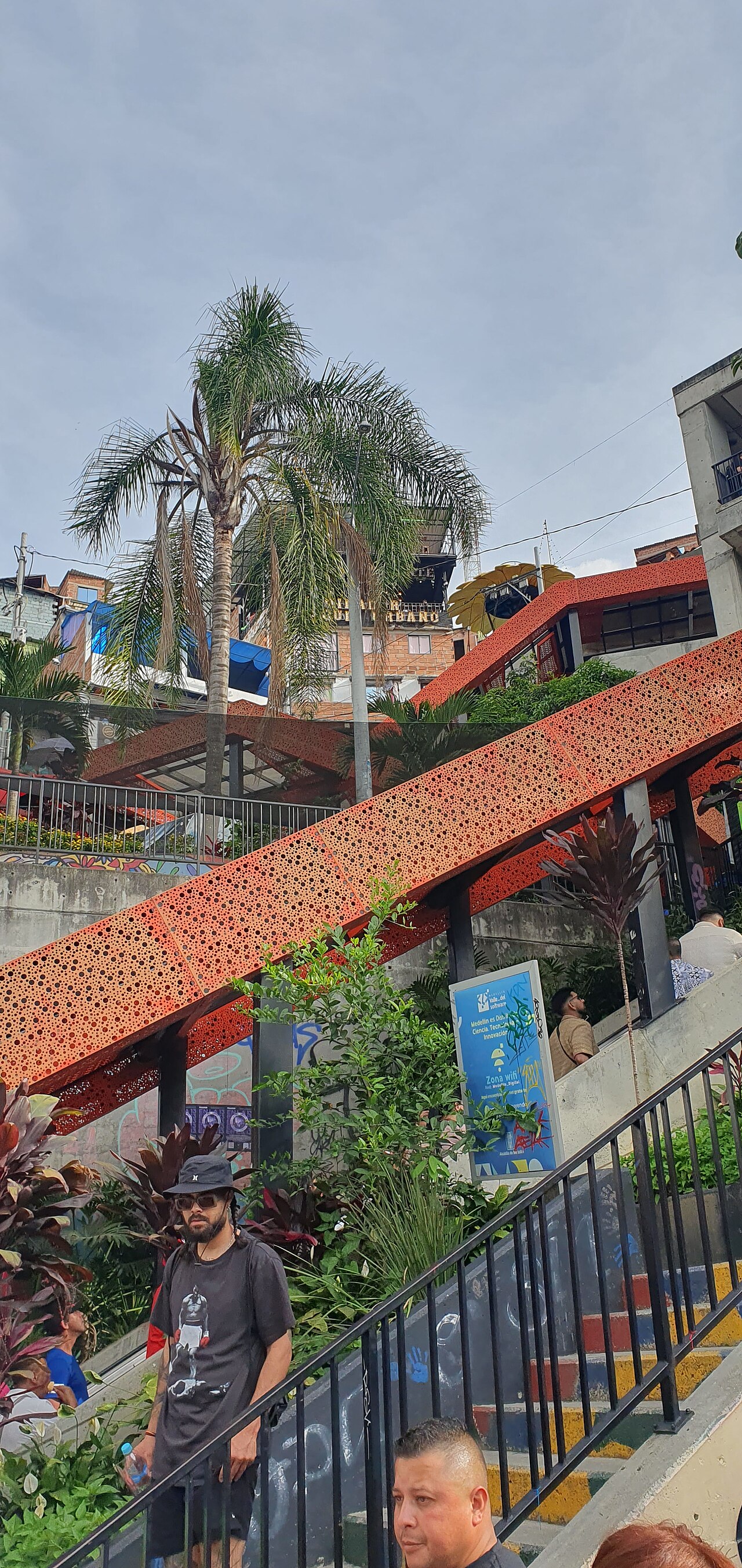
In Comuna 13, long considered the most dangerous district in the city due to ongoing armed conflicts, the city authorities implemented another unconventional spatial project: installing a system of giant outdoor escalators. They replaced hundreds of steep, hazardous stairs that local residents had to climb daily to reach their homes. Convenient viewing platforms were built around the escalators, the walls of surrounding houses were decorated with vibrant murals, and local residents were encouraged to open legitimate cafes and souvenir shops.
Such urban interventions transformed zones of total fear into areas of civic pride. Modern architecture became a symbol of respect for residents who had previously felt forgotten, while streets where shootouts once took place became vibrant with social life and began attracting domestic and international tourists.
Lessons for Ukrainian cities
- Prioritizing investments in vulnerable areas. Post-war reconstruction must not be limited solely to central or economically prosperous parts of cities; it is precisely the depressed and most heavily affected neighborhoods that should receive the best architectural and infrastructural solutions to prevent marginalization.
- Mobility as a tool for equality. Convenient and affordable public transit that reliably connects remote outskirts with the business center is a fundamental prerequisite for local economic development and residents' access to jobs and social services.
- Multifunctional public spaces. Creating modern cultural and educational centers in residential suburbs or former industrial areas helps build local communities, reduces social tensions, and provides youth with opportunities for self-realization.
- Flexibility of engineering solutions. Challenging terrain, dense urban development, or infrastructural destruction demand innovative planning approaches, adapting global best practices (such as cable cars or outdoor escalators) to local needs instead of relying exclusively on standard, generic solutions.