
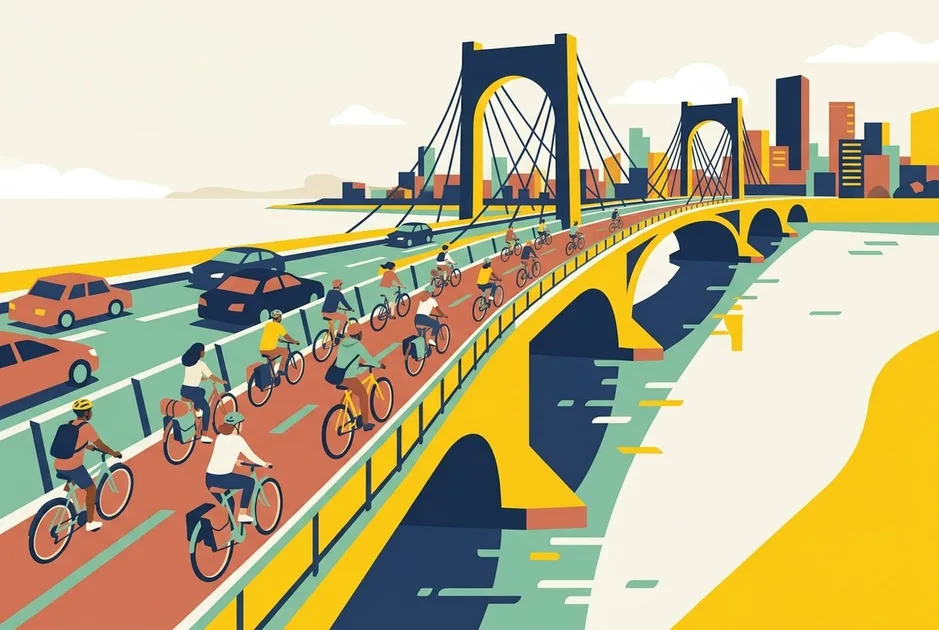
Copenhagen is often called the bicycle capital of the world, but this status is not the result of a unique mentality or favorable climate, but rather the consequence of consistent and bold urban policy. The experience of the Danish capital proves that the transition from car-centricity to sustainable mobility is possible provided that convenient infrastructure is created, making this case especially valuable for rethinking the transport systems of Ukrainian cities.
From automotive utopia to sustainable mobility
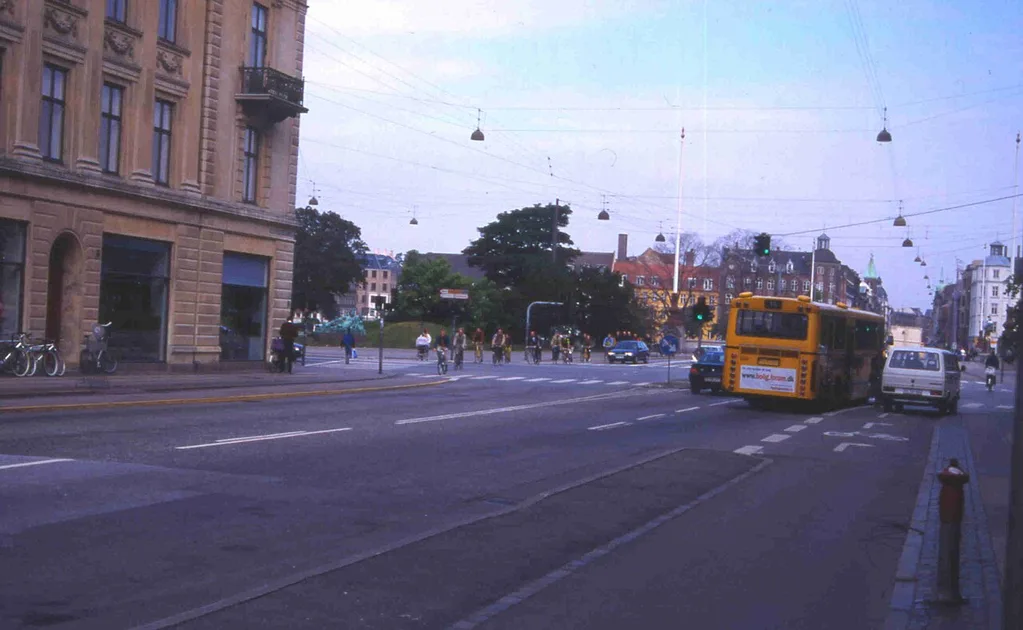
Today it is hard to imagine, but in the middle of the last century, Copenhagen was following a path of motorization typical of many European cities. Urban planners designed projects for wide highways that were meant to cut through the historic center, and public squares were transformed into large parking zones. The bicycle, which had historically been popular among city residents, began rapidly losing ground, giving way to private motor vehicles.
The turning point was the energy crisis of the 1970s. The sudden surge in fuel prices forced society and authorities to seek alternative development paths. At the same time, civic activists took to the streets demanding to make the city safer for pedestrians and children, as the number of car-related traffic accidents was steadily rising. It was this bottom-up pressure, reinforced by economic challenges, that forced the municipality to shift its priorities.
The authorities began gradually reducing the number of parking spaces in the city center and narrowing roadways in favor of alternative modes of travel. This process was not immediate: the transition took several decades, requiring continuous dialogue with residents and businesses, who initially often resisted restrictions on cars.
Infrastructural approach: safety and continuity
The main secret of Copenhagen's success was abandoning the idea that simply painting lines on asphalt is enough to develop cycling. The city developed its own infrastructure standard, the fundamental principle of which is the physical separation of traffic flows. A typical Copenhagen cycle track is separated from the roadway by a curb, and from the sidewalk by another step in elevation. This creates a sense of absolute safety, enabling the widespread use of bicycles by the elderly, parents with young children, and city residents in business suits.
Another critically important aspect is network continuity. The city has virtually no bike paths that abruptly end before a complex intersection. All transport hubs are designed taking cyclists' movement trajectories into account: advanced stop lines, dedicated traffic light phases, and refuge islands are created for them.
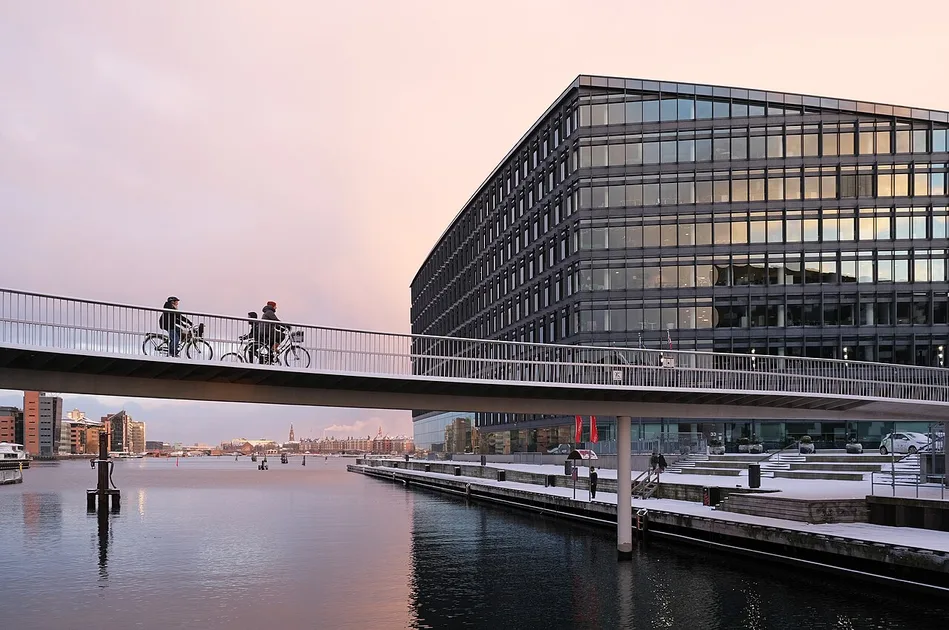
In addition, city authorities prioritized speed and convenience. On many arterial routes, traffic lights are synchronized in a so-called "green wave" for cyclists. By riding at an average speed, one can travel across a significant part of the city without stopping for a red light even once. Copenhagen also invests heavily in building bridges across canals designated exclusively for pedestrians and non-motorized transport, making bicycle trips significantly shorter than car routes.
Systemic integration and changing the status quo
The bicycle in Copenhagen does not exist in a vacuum—it is an integrated part of the overall transport system. The city ensured that two-wheeled transport seamlessly complements public transit. Large-scale bicycle parking facilities are installed near every metro or commuter train station, and train cars feature dedicated spaces for transporting bicycles. This allows residents to easily combine different modes of transport to cover long distances.
The city's true priorities are best illustrated by its approach to winter street maintenance. During snowfalls, Copenhagen's municipal services clear arterial bike paths first, and only then move on to roads for cars. This sends a clear signal from the municipality: the bicycle is a full-fledged, all-season mode of transport that the city relies on as the foundation of its mobility.
Thanks to this policy, cycling has become the default choice. Most residents choose it not out of concern for the environment or a desire to exercise, but simply because it is the fastest, cheapest, and most convenient way to get from point A to point B.
Lessons for Ukrainian cities
- Safety is a basic prerequisite, not an option. Physical separation of cycle tracks from the roadway and sidewalks is the only way to attract diverse age groups to cycling, including children and the elderly.
- The network must be continuous. Bicycle infrastructure works only when it connects points of interest without gaps, as the safety of an entire route is determined by its most dangerous section.
- Integration with public transport expands possibilities. The ability to conveniently leave a bike at a park-and-ride facility or take it on a commuter train turns it into a full-fledged tool for covering the "last mile."
- Prioritization in decision-making is more important than climate. The experience of a northern city proves that clearing bike paths of snow first as a priority and tuning traffic lights to the speed of cyclists shape habits more effectively than ideal weather conditions.