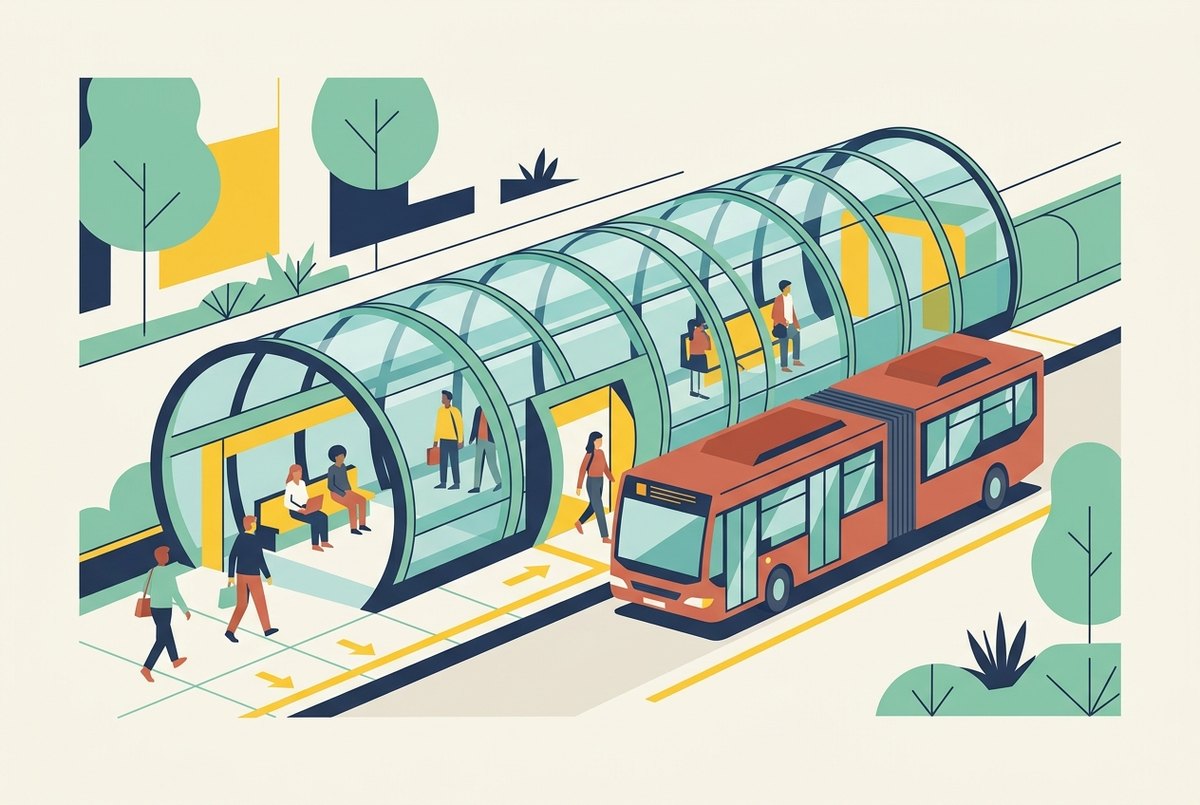
Decades ago, the Brazilian city of Curitiba proved that creating a fast and efficient public transport system does not require digging kilometers of tunnels. The local Bus Rapid Transit (BRT) network became a true "metro on wheels," offering the world an inexpensive, flexible, and eco-friendly alternative to traditional subways. This case is a classic example of how an innovative approach to urban planning can solve traffic congestion even under extremely tight municipal budgets.
How the Idea of a "Surface Metro" Emerged
In the second half of the twentieth century, Curitiba, like many other Latin American cities, faced explosive population growth. Rapid urbanization led to chaotic development and inevitable traffic gridlock, as the number of private cars on the streets steadily increased. The traditional solution for cities of this size would have been to build a classic subway system or construct new wide highways. However, the local budget simply could not afford such large-scale and costly infrastructure projects.
Then, the city administration, led by architect and urban planner Jaime Lerner, chose a fundamentally different path. Instead of tailoring the city to the needs of motorists by widening roads and building multi-level overpasses, the planning team decided to focus primarily on developing public transit. The idea was to give conventional city buses the characteristics of a subway: high operating speeds, uninterrupted service, high passenger capacity, and effortless boarding. Thus was born the concept of Bus Rapid Transit, which eventually transformed Curitiba into a global capital of urban innovation.
Anatomy of Success: How the BRT System Works
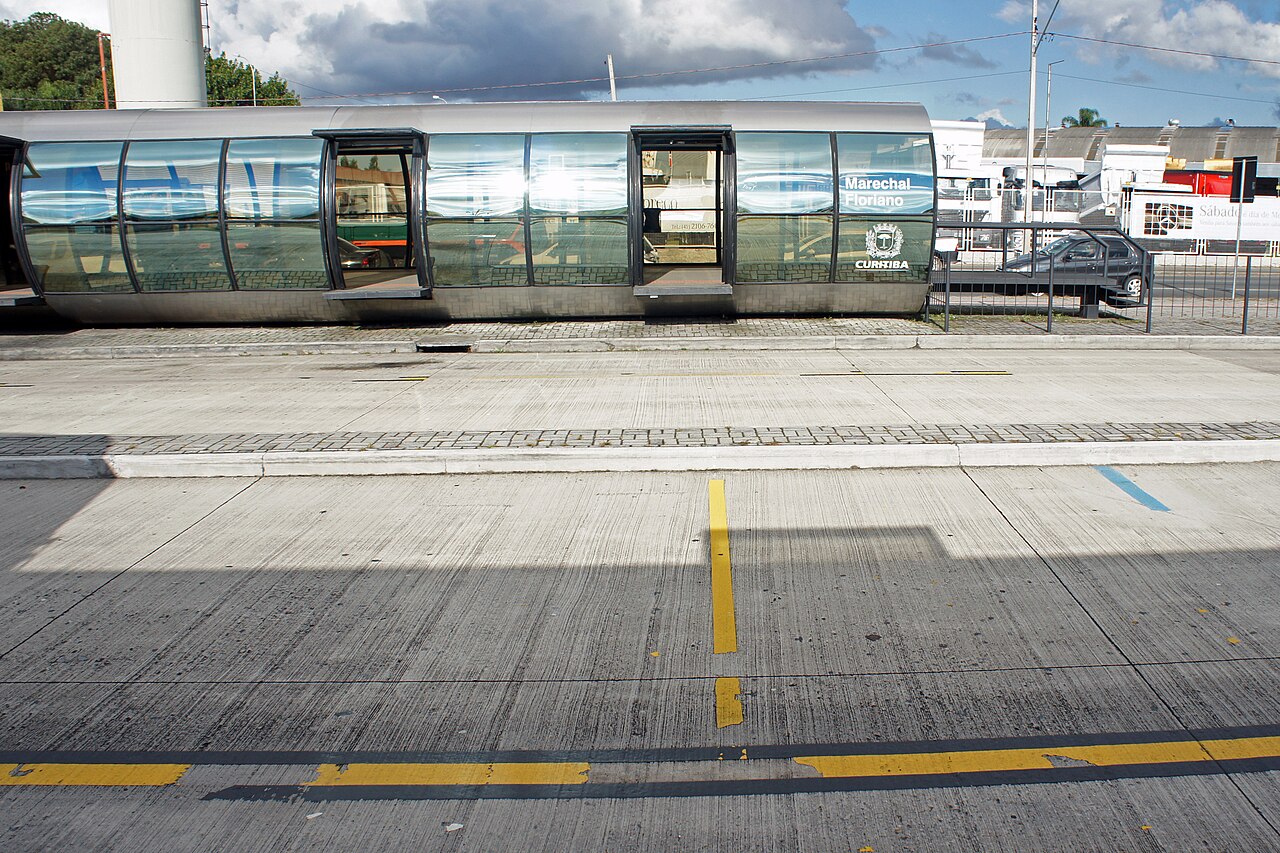
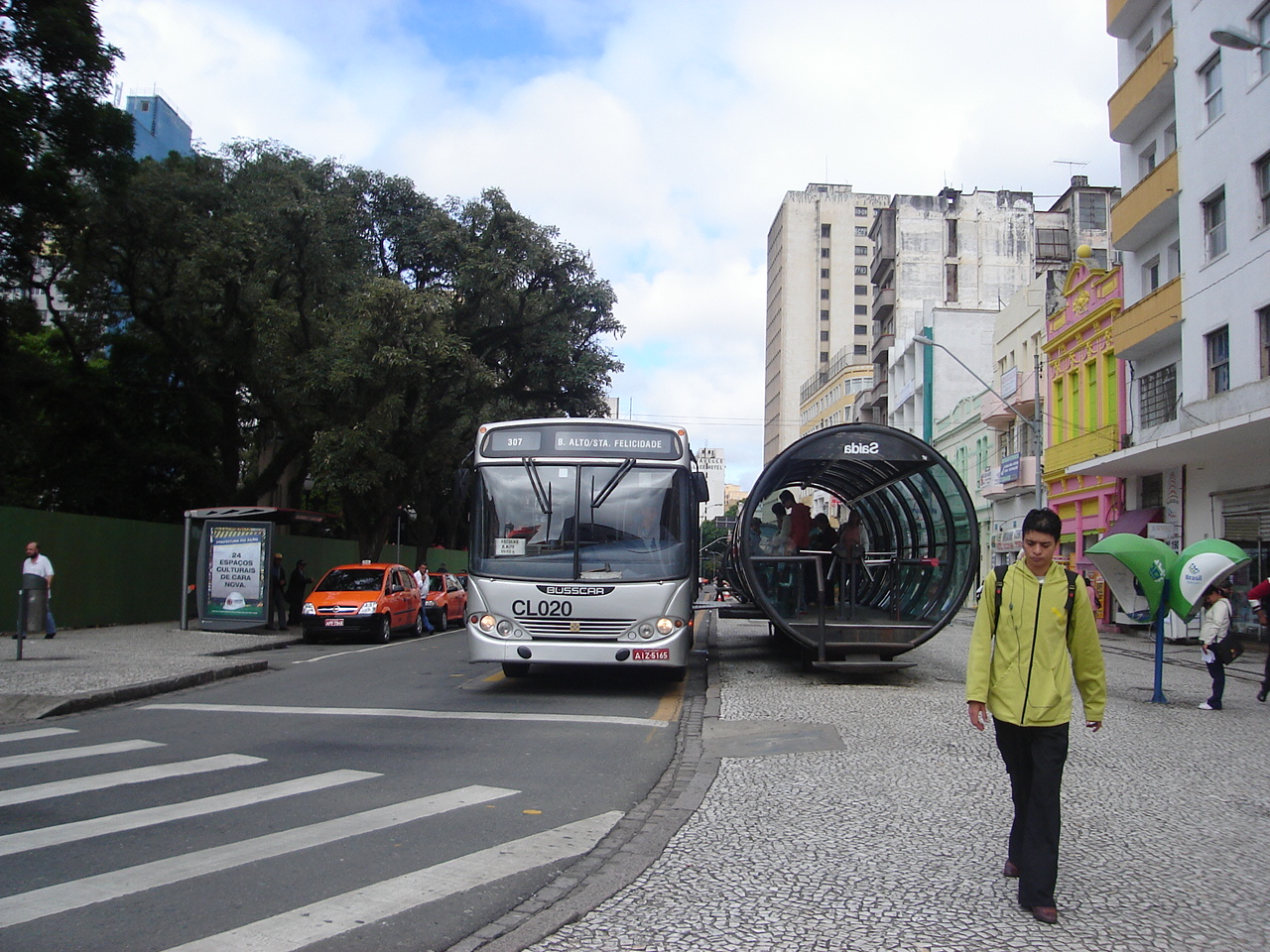
For buses to compete successfully with private transport and function like a real subway, the planners had to completely rethink how traffic was organized. The primary innovation was designating the central lanes of major avenues exclusively for public transport. Unlike ordinary bus lanes, which are often blocked by parked cars or violators, Curitiba's trunk BRT lines are physically separated from general traffic. This avoided traffic jams and guaranteed strict adherence to schedules, regardless of road conditions.
A second crucial element was the unique tube-shaped glass stations (tubo stations). They were designed so that passengers pay their fares before boarding by passing through turnstiles at the entrance to the pavilion. The station platform itself is level with the bus floor. When a vehicle pulls up, fold-out ramps connect the station to the interior, allowing dozens of people to board and alight simultaneously without steps. This significantly reduced dwell time at stops and made transit fully accessible for wheelchair users and passengers with strollers.
To serve these trunk lines, the city began using specialized extra-long—articulated and bi-articulated—buses. Such rolling stock can accommodate several times more passengers than standard vehicles. Combined with a network of transfer terminals and a unified fare that allows switching between different routes at no extra cost, the system became exceptionally attractive to city residents.
Economic and Spatial Dimensions
The implementation of the bus rapid transit system had a profound impact on Curitiba's economic and spatial development. The most obvious advantage was unprecedented financial savings. Constructing one kilometer of a dedicated BRT line cost the city dozens of times less than building a comparable stretch of an underground subway. In addition, the project was completed much faster, as it did not require complex and time-consuming subterranean construction.
Transit reform also catalyzed profound shifts in urban planning. The city began to grow along main transit corridors. The municipality permitted the construction of high-rise housing and high-density commercial developments exclusively alongside BRT lines. The further away from the stations, the lower and less dense the buildings had to be. This generated natural demand for public transit services, as most people lived, studied, or worked within walking distance of the "metro on wheels" stops.
Thanks to the system's convenience and reliability, a significant portion of Curitiba's residents voluntarily gave up daily car use. This not only relieved city streets from congestion but also substantially improved air quality, making Curitiba one of the most environmentally friendly metropolises in the region. The experience proved so successful that the bus rapid transit concept was subsequently copied and adapted by hundreds of cities worldwide.
Lessons for Ukrainian cities
- Prioritizing space over technology. Rapid transit does not always require expensive rail systems or underground tunnels; a physically segregated lane for high-capacity buses or trolleybuses can deliver high efficiency if traffic is properly organized.
- Optimizing boarding time. Moving fare collection to stations and installing level-boarding platforms critically reduces dwell time along routes, making trips faster and more comfortable for everyone, including people with reduced mobility.
- Transit-Oriented Development (TOD). Infrastructure projects work best when synchronized with zoning and building codes: the highest density of residential and commercial space should be concentrated precisely along main public transit routes.
- Unified ticketing and seamless transfers. The ability to easily transfer between routes within transit hubs without paying twice is a key factor motivating residents to choose public transit over private cars.