
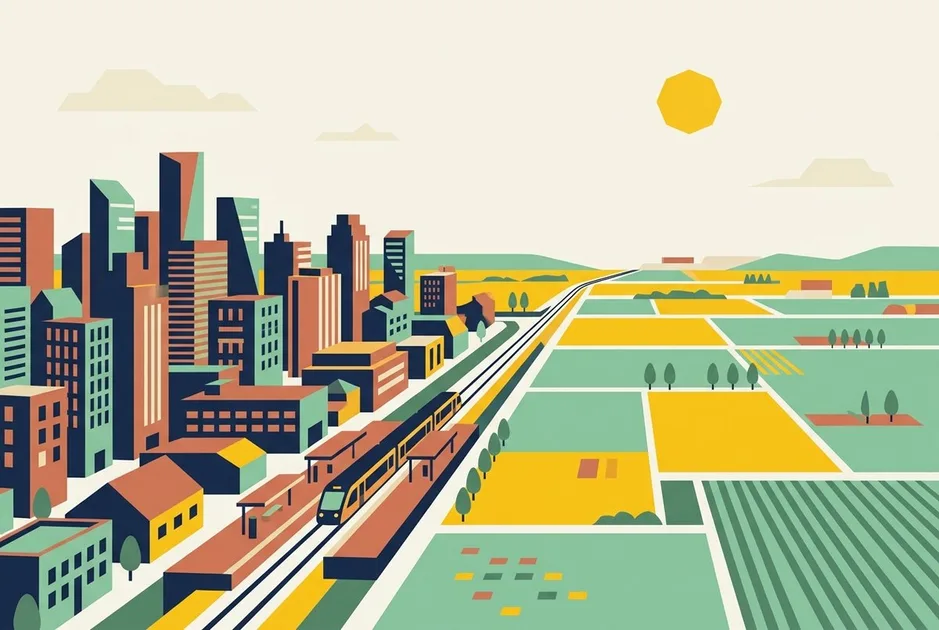
The American city of Portland has become a textbook global example of how to curb uncontrolled suburban sprawl using the "Urban Growth Boundary" tool. This case demonstrates that strict spatial planning and a focus on development within the existing urban footprint can not only preserve natural landscapes, but also stimulate the creation of efficient transit infrastructure and livable neighborhoods.
How Legislation Stopped Urban Sprawl
In the second half of the twentieth century, most US cities developed along a trajectory of rapid suburbanization. Mass motorization and the construction of highways led to middle-class residents moving en masse into private homes on the outskirts. This caused the decline of historic downtowns, excessive spending on extending utilities to new areas, and the irreversible loss of agricultural and forest lands. However, the state of Oregon decided to take a different path.
Back in the 1970s, state-level authorities adopted progressive land-use legislation. It required every municipality to draw a clear line on the map separating urbanized areas from rural ones. In Portland, management of this boundary was undertaken by Metro, a regional government unique to the US, which unified the interests of the city itself and dozens of surrounding towns. All new construction, commercial real estate, and infrastructure had to be located strictly within this zone, while lands outside it were granted strict conservation or agricultural status. This decision became the foundation for a completely new philosophy of urban development that radically differed from the typical American model.
Inward Development: Densification and the Bet on Public Transit
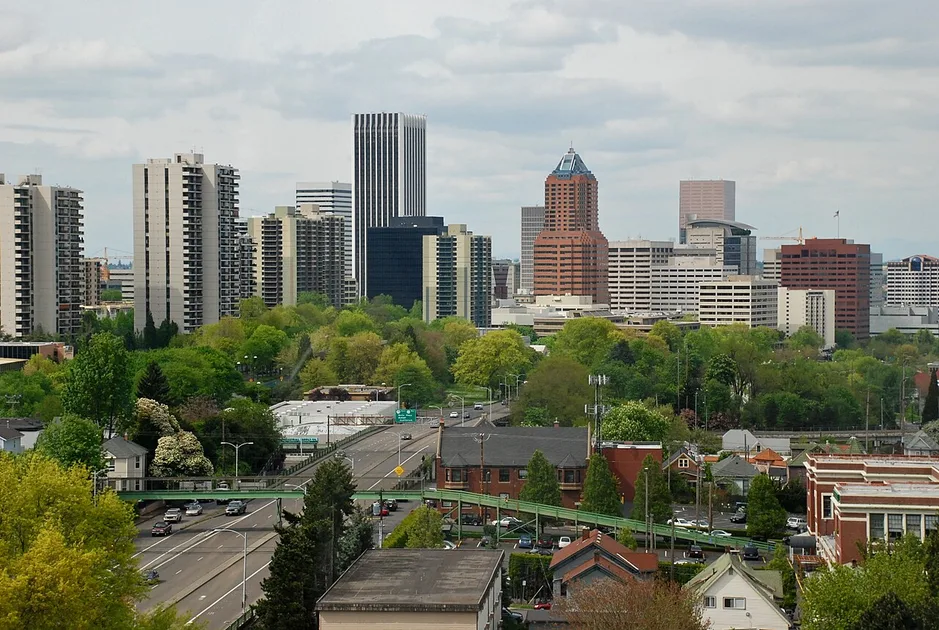
Because the land available for Portland's outward expansion was strictly limited, the city had to find internal reserves for growth. Instead of building over green fields on the periphery, the municipality actively began revitalizing abandoned industrial zones and old warehouse districts closer to the center. The most famous example of this approach was the transformation of the former industrial Pearl District into a prestigious mixed-use neighborhood with housing, offices, galleries, and parks.
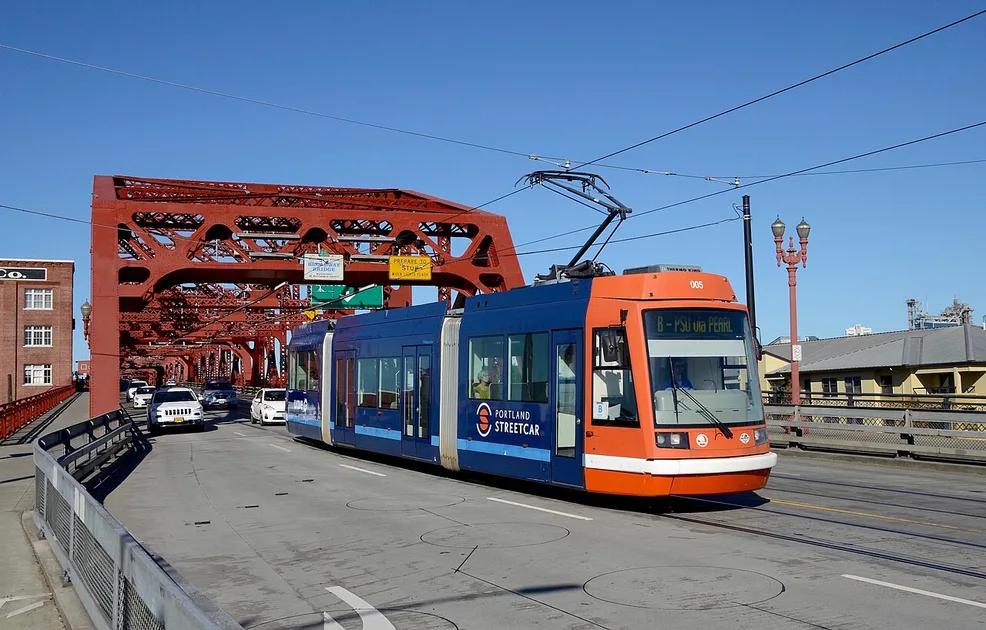
Limiting the city's footprint also made the construction of new multi-lane freeways economically impractical. Instead, Portland invested in expanding its public transit system. The city created an extensive light rail network (MAX Light Rail), modern streetcars, and bus routes. The compactness of the urban fabric enabled the implementation of the "20-minute neighborhood" concept, where residents can reach shops, schools, healthcare facilities, and recreational spots on foot or by bicycle. As a result, Portland consistently ranks among the most walkable and bike-friendly cities in North America today.
Challenges of a Compact City and the Housing Affordability Issue
Despite obvious urban planning and environmental successes, the urban growth boundary is not a flawless tool and creates serious challenges of its own. Chief among them is the housing affordability crisis. Due to high demand for real estate in an attractive city and an artificially constrained land supply, purchase and rental prices in Portland have risen substantially. This has led to the gentrification of many historic neighborhoods, displacing low-income local residents who could no longer afford rising taxes and rents.
It is worth noting that the urban growth boundary is not a static concrete wall. Legislation requires the regional government to regularly analyze demographic forecasts and housing needs. If analysis shows that land within the boundary is insufficient to accommodate urban growth for the next two decades, the line can be expanded. However, this process is always accompanied by complex political debates between developers seeking expansion and environmental advocates fighting for land conservation and further densification of the existing urban fabric.
Lessons for Ukrainian cities
- Controlling sprawl saves budgets: Curbing the extensive expansion of city boundaries optimizes spending on laying and maintaining new utility networks, roads, and public transit routes.
- Prioritizing revitalization over greenfield development: Instead of developing open fields on the periphery, cities should inventory and repurpose abandoned industrial sites within the urban fabric, turning them into mixed-use residential and commercial neighborhoods.
- Synchronizing densification with infrastructure: Compact development works only when paired with the simultaneous expansion of high-quality public transit, pedestrian, and bicycle infrastructure; otherwise, traffic congestion will paralyze the city.
- The need for affordable housing policies: Any tools that restrict land for development inevitably put pressure on the real estate market, meaning municipalities must proactively implement social and municipal housing programs to prevent gentrification.