
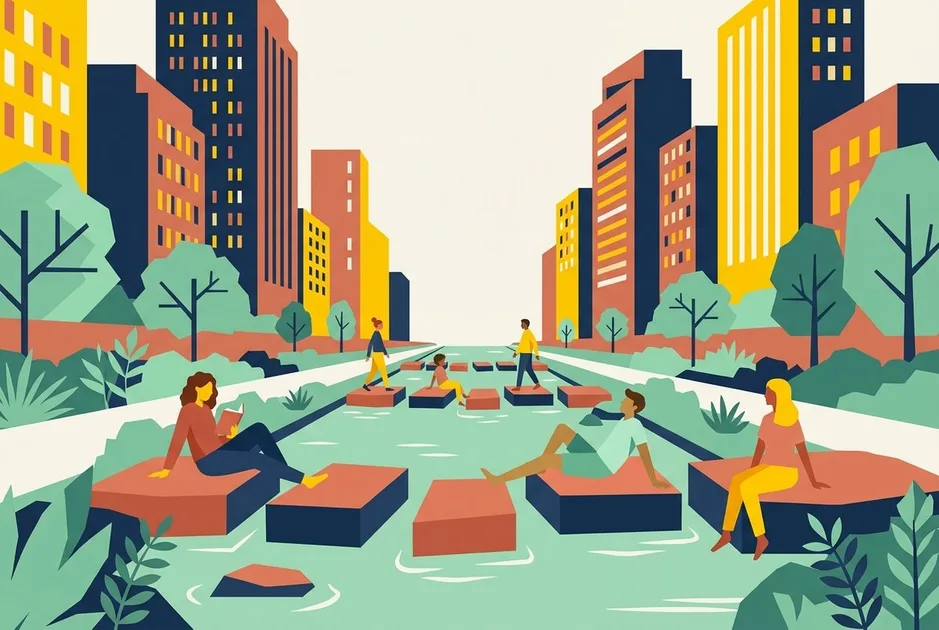
The Cheonggyecheon river restoration project in Seoul is one of the world's most famous examples of how cities can correct the mistakes of the past by moving away from car-centric infrastructure. Demolishing a multi-lane elevated highway and restoring a natural waterway in its place proved that green spaces instead of concrete can not only improve the environment, but also provide a powerful economic boost for the development of entire neighborhoods. This case demonstrates that even the most radical urban transformations can succeed if they are rooted in human comfort and respect for nature.
From a Natural Waterway to a Concrete Highway
In the middle of the last century, Seoul was undergoing rapid industrialization, surging population growth, and large-scale post-war reconstruction. The Cheonggyecheon Stream, which historically flowed through the city center, had turned in those years into a sort of open sewer and an area of informal settlements. The banks of the waterway were dotted with shanties, and industrial and domestic waste was dumped into it, turning the river into a public health hazard. Eventually, the municipal authorities made a decision typical of that era: the riverbed was completely encased in concrete, and a wide roadway topped with a massive elevated expressway was built over it.
For several decades, this highway was considered a symbol of South Korea's rapid modernization and economic miracle. It carried a massive flow of vehicular traffic, connecting various parts of the metropolis. Over time, however, the consequences of such an urban design decision became obvious. The area surrounding the transit overpass deteriorated: it suffered continuously from severe noise, critical levels of air pollution, and vibrations from heavy traffic. Beneath the elevated road, there was almost no sunlight, creating a gloomy and unsafe atmosphere. Economic activity in adjacent neighborhoods began to decline, while the concrete infrastructure itself was deteriorating and requiring ever-increasing public funds for ongoing repairs and safety maintenance. Instead of connecting the city, the highway cut it in two, creating an extremely hostile environment for pedestrians.
Dismantling the Overpass and Restoring Nature
In the early 2000s, the Seoul city government initiated an unprecedented revitalization project. Rather than spending massive funds on yet another overhaul of the deteriorating overpass, a bold decision was made to dismantle it entirely, uncover the old channel, and restore the Cheonggyecheon stream. This initiative sparked lively debate and public resistance: motorists feared total traffic gridlock in downtown Seoul, while local merchants and business owners were afraid of losing customers due to prolonged construction work.
Nevertheless, the authorities stood firm, launching a large-scale communication campaign. Thousands of meetings were organized with local residents and businesses to find compromises. In parallel, the city substantially reorganized its transit network, prioritizing public transportation—notably introducing a new bus rapid transit system to compensate for the lost vehicular capacity.
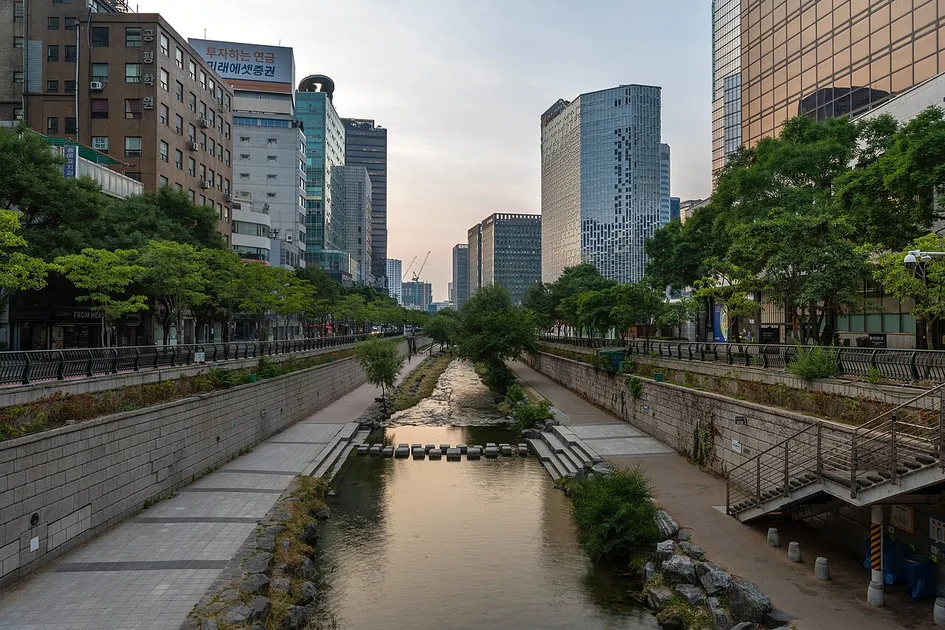
The reconstruction itself was a major engineering challenge, requiring the removal of thousands of tons of concrete and asphalt from the heart of a densely populated metropolis. Because the river's natural source had long since dried up due to pervasive urbanization and altered groundwater levels, water for the new stream had to be pumped from other rivers and underground sources after being treated in filtration facilities. The banks of the revitalized Cheonggyecheon were reinforced, thousands of trees and shrubs were planted along them, pedestrian-friendly pathways were laid out, and several new bridges of varying designs were built, reconnecting neighborhoods that had previously been torn apart.
Ecological and Economic Renaissance of Downtown Seoul
Following the opening of the revamped public space, the results far exceeded the expectations of urban planners and skeptics alike. The traffic apocalypse that opponents had warned about never materialized; instead, the "reduced demand" effect took place, as some drivers switched to public transit while others simply adjusted their routes. Meanwhile, the environmental situation in central Seoul improved dramatically.
Thanks to the open water and new greenery, a "wind corridor" effect was created, providing a natural circulation of fresh air along the waterway. The average temperature around the stream during summer heatwaves became noticeably lower than in adjacent built-up neighborhoods. This helped significantly mitigate the dangerous urban heat island effect. Furthermore, birds, fish, and insects returned to the city center, restoring lost local biodiversity.
From an economic standpoint, the project also proved exceptionally beneficial. Cheonggyecheon turned into one of the city's most popular public spaces, attracting millions of tourists and local residents every year seeking tranquility by the water. Property values in surrounding areas increased significantly, while old warehouses, neglected buildings, and makeshift markets were replaced by modern offices, cafes, restaurants, and cultural venues. The city did not just gain a restored river, but a powerful new driver of spatial and economic development.
Lessons for Ukrainian cities
- Prioritizing public space over transit. Dismantling automotive infrastructure in city centers does not cause gridlock if high-quality public transit is developed in parallel and convenient pedestrian alternatives are created.
- Blue-green infrastructure as a remedy for heat. Open water bodies and systematic greening effectively counteract the "heat island" effect, significantly lowering air temperatures in densely built environments.
- Economic benefits of revitalization. High-quality, pedestrian-oriented public spaces stimulate small business development, increase adjacent real estate values, and attract investment even to distressed neighborhoods.
- The importance of political will and communication. Even the most unpopular decisions among drivers can become successful projects if the authorities transparently communicate long-term benefits and actively maintain dialogue with the community.