
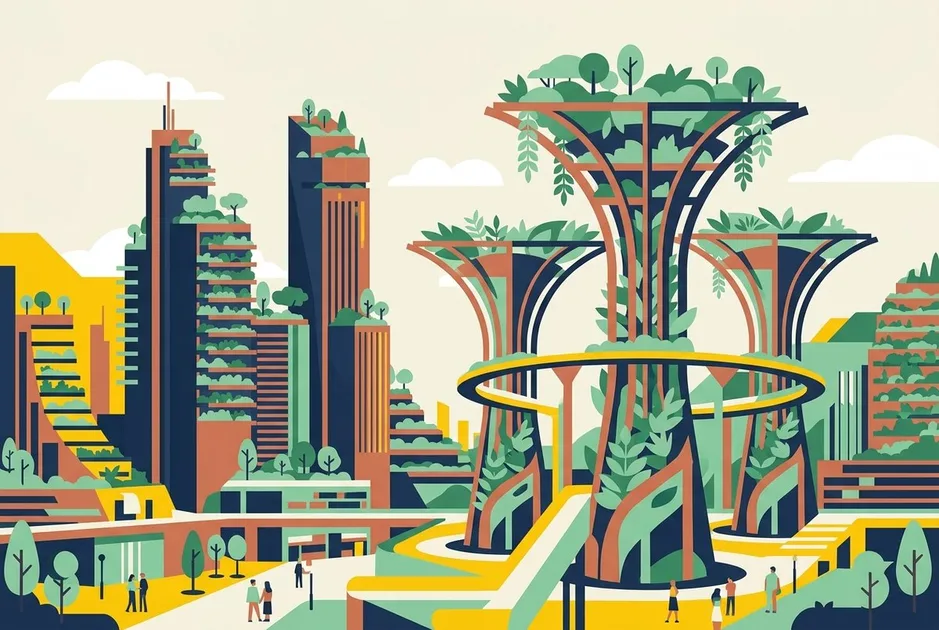
Singapore has made an unprecedented transition from a densely built metropolis to an innovative "city in nature" concept, where green spaces are physically integrated into architecture at all levels. This experience convincingly proves that even under conditions of acute land scarcity, it is possible to create a climate-resilient environment that fosters the physical health and psychological well-being of its residents.
The Evolution of Urban Planning: From Gardens to an Integrated Ecosystem
The history of large-scale greening in Singapore began several decades ago with the ambitious yet fairly linear idea of creating a "Garden City." In the early years of independence, the authorities' primary objective was to plant as many trees as possible along roads and establish new traditional parks. This was done to mitigate the harsh consequences of rapid urbanization and industrialization, as well as to improve the visual image of the young nation. Over time, however, the approach underwent a radical transformation. Recognizing the limits of extensive development on a small island, the city shifted its paradigm toward the "City in Nature" concept.
This new urban planning philosophy entails not merely the presence of separate, isolated green spaces, but their seamless integration with the urban fabric. Nature is no longer viewed as a pleasant addition to concrete infrastructure—it becomes a full-fledged, integral part of it. Through the development and implementation of an extensive network of park connectors, fragmented green areas and nature reserves were united into a single, cohesive pedestrian and cycling system. This approach allowed residents to move freely between different city districts through shaded green corridors, avoiding noise, vehicle emissions from highways, and direct sunlight.
Vertical Greening as an Answer to Space Scarcity
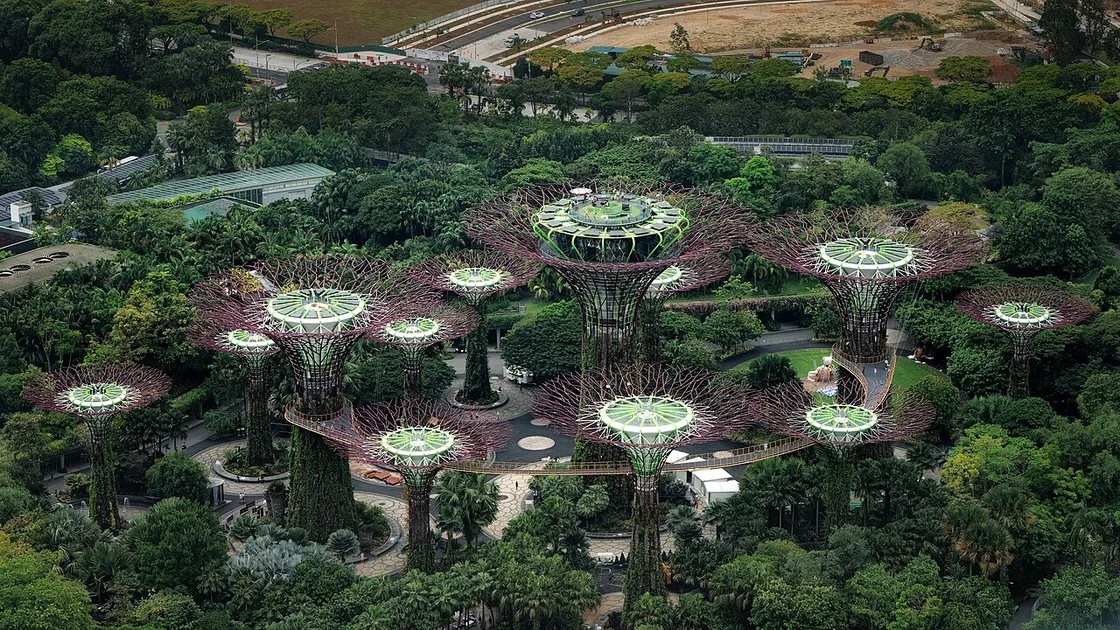
Due to its extremely limited land area and exceptionally high population density, Singapore was forced to seek unconventional spatial solutions. The answer to this challenge was taking nature into another dimension—onto the facades, rooftops, balconies, and open terraces of skyscrapers. Over a few decades, vertical greening evolved from isolated and expensive architectural experiments into a widespread, mandatory standard in urban construction.
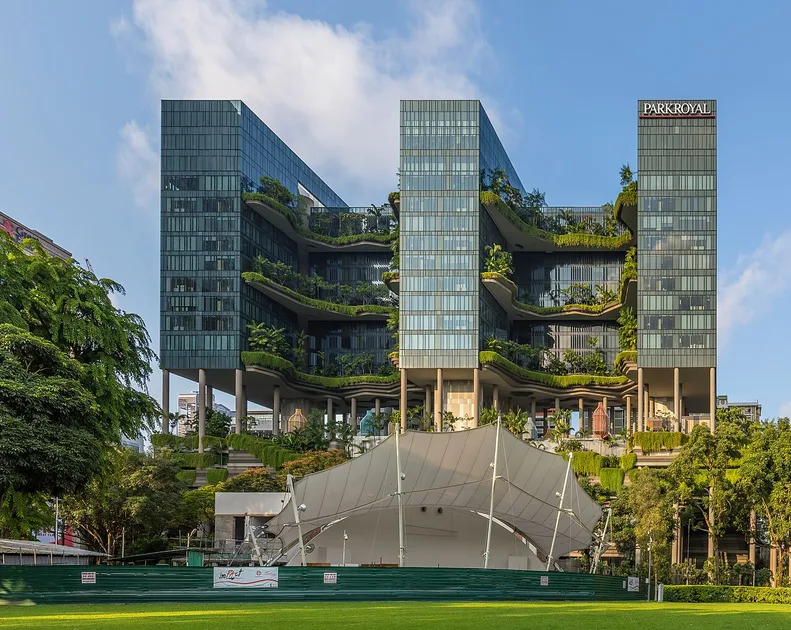
A well-thought-out and consistent government policy played a key role in this transformation. Local building codes and specialized incentive programs directly encourage—and in many cases require—developers to replace the greenery lost at ground level during construction. The rule works simply: if a developer occupies a plot of land for a building's footprint, they must recreate the same or even greater volume of greenery across various tiers of their structure.
As a result, the city became filled with buildings featuring tiered gardens, large-scale green walls, and publicly accessible rooftop parks. While futuristic vertical gardens have become the most famous global symbol of this approach, the true urban value lies elsewhere. Vertical greening is widely applied not only in luxury hotels, but also in regular public housing estates, public hospitals, schools, and office buildings, making nature accessible to every city resident on a daily basis.
Climate Resilience and Urban Biodiversity Restoration
Integrating nature into modern architecture holds not only aesthetic or recreational value, but also profound practical significance. In a hot climate, the extensive greening of walls and rooftops functions like a giant natural air conditioner. Vegetation effectively absorbs solar radiation and provides shade, substantially reducing temperatures both inside and around buildings. This helps mitigate the urban heat island effect on city streets and significantly saves electricity that would otherwise be spent on artificial cooling.
Furthermore, green roofs, vertical gardens, and specially designed landscape areas play a critical role in stormwater management. The city utilizes principles that allow for retaining and filtering moisture during heavy downpours. This radically reduces the peak load on the municipal stormwater drainage system and prevents localized street flooding. Alongside solving infrastructural challenges, Singapore has witnessed an impressive return of many species of birds, insects, and small animals to the urban environment. Creating complex ecosystems on building facades promotes the successful restoration of urban biodiversity, turning the metropolis into a living, breathing organism.
Lessons for Ukrainian cities
- Implementation of compensatory greening. Ukrainian municipalities should develop local regulations that incentivize developers to replace built footprint area through green roofs, facades, and open terraces in new residential and commercial projects.
- Forming continuous green networks. Instead of creating isolated public squares in a piecemeal fashion, cities should plan unified green corridors connecting different districts with safe, shaded pedestrian and cycling routes.
- Utilizing nature as infrastructure. Greening must be designed not only for aesthetics, but also as an effective tool for cooling urban spaces during summer heatwaves and naturally retaining stormwater.
- Rethinking "gray" areas. Any available surface—be it a blank building wall, a retaining structure, or the roof of an underground parking lot—can be transformed into an ecologically beneficial area using vertical greening techniques.