
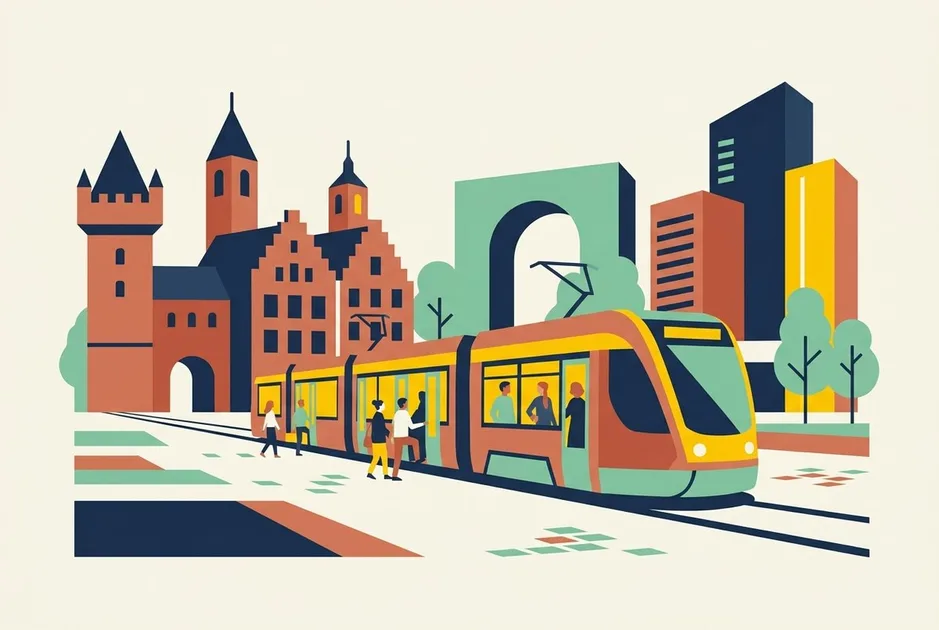
In 2013, the capital of Estonia became the first European city to introduce fully free public transport for its registered residents. This large-scale experiment attracts the attention of urban planners worldwide, as it demonstrates in practice how abolishing fares affects urban mobility, the local economy, and social equity within a large metropolitan area.
Background and Mechanics of the Estonian Decision
Tallinn approached the idea of free transport against the backdrop of the global economic crisis, when a significant portion of the population was experiencing financial hardship. Surveys and urban studies showed that for many residents, ticket prices were a substantial barrier to moving around the city regularly. This restricted their opportunities in finding employment, accessing healthcare services, and participating fully in cultural life. At the same time, the capital suffered from an unrelenting increase in motorization: traffic jams were becoming commonplace, and air quality was deteriorating. The city authorities initiated a public discussion and held a referendum in which the overwhelming majority of citizens supported the concept of abolishing fares.
The implementation mechanism proved to be fairly simple yet effective from an urban management perspective. The right to free travel was granted exclusively to people who officially registered their place of residence in Tallinn. To use the transport, residents needed to purchase a special personalized smart card for a nominal fee. Each time they boarded a bus, tram, or trolleybus, passengers were required to validate this card by tapping it against a reader. This approach allowed the municipality to maintain accurate tracking of passenger flows. It is worth noting that the system did not become free for absolutely everyone: tourists, residents of other municipalities, and unregistered individuals continue to pay fares at standard rates, preserving a portion of direct revenue for transport companies.

The Economics of Free Transit: How It Works in Practice
The main question that arises among financiers and urban managers when discussing the Tallinn case is where the city gets the money to maintain the transport system if it foregoes ticket sales to local residents. The answer lies within the Estonian taxation system. Under national legislation, a portion of personal income tax is automatically allocated to the budget of the municipality where a person is officially registered.
Prior to the reform, thousands of people actually lived in Tallinn and used its infrastructure, roads, and municipal amenities daily, yet remained registered in other communities across the country. Through the powerful financial incentive of free transport, the city prompted these individuals to switch their official registration to the capital. Consequently, tax revenues to the city budget increased significantly in the very first years after the initiative's launch.
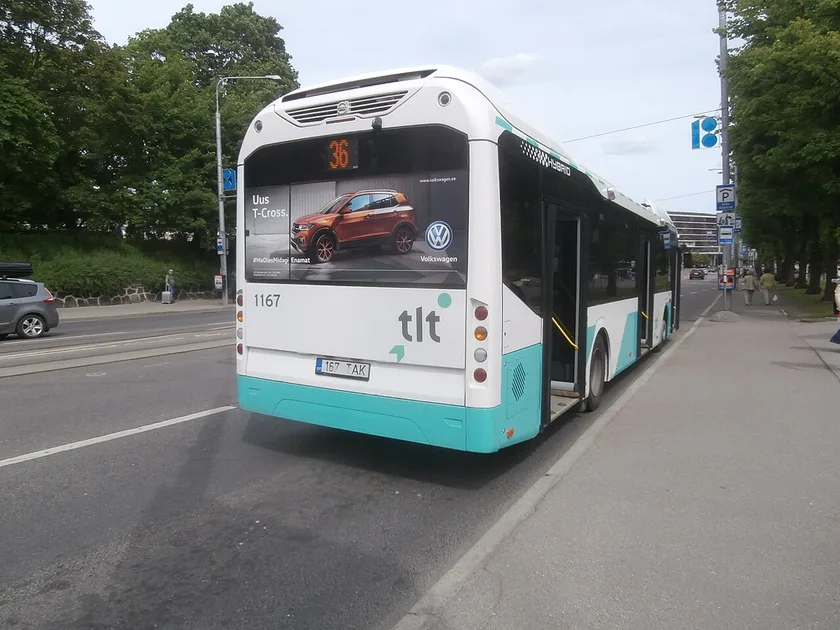
Economists note that these additional revenues not only fully compensated for the financial losses from abolishing fares, but also generated a budget surplus. This allowed the city not merely to maintain the existing transport network, but to actively invest in its development. The municipality was able to modernize its rolling stock by purchasing modern buses and trams, as well as expand the route network and increase service frequency. Thus, public transport came to be viewed not as a commercial service, but as a basic public good, functionally similar to city parks, street lighting, or public libraries.
Impact on Mobility: Expectations and Reality
The results of the Tallinn experiment proved to be multifaceted and at times unexpected, making this experience particularly valuable for critical analysis. On the one hand, the reform brilliantly achieved its primary social goal. The mobility of low-income residents, retirees, students, and large families noticeably increased. Researchers recorded that people gained the opportunity to move around the city much more frequently, visiting other districts for work, shopping, or leisure. This provided a tangible positive boost to local businesses, as the money citizens saved on transport fares was spent on other goods and services within the community.
On the other hand, hopes for a radical reduction in the number of private cars on the roads failed to materialize. Transport analysts found that dedicated motorists largely did not switch to public transport. For drivers, the key factor in their choice remains not the cost of the trip, but time savings, route flexibility, and personal comfort. Instead, the overall increase in bus and tram passenger numbers occurred largely at the expense of pedestrians and cyclists. People began using transport even for very short trips that they had previously covered on foot. This confirmed urbanists' premise that the mere absence of fares is not a sufficient incentive to give up private cars unless public transport has an absolute advantage in speed and predictability.
Lessons for Ukrainian cities
- Abolishing fares is an extremely effective tool for overcoming the social isolation of vulnerable populations, but it does not work as a standalone measure for combating urban traffic congestion.
- The financial viability of such projects depends on the tax architecture: benefits must be strictly tied to local residency registration to incentivize the formalization of residency and expand the community's tax base.
- To get drivers out of private cars and onto public transport, key investments should be directed not so much toward lowering fares, but toward developing dedicated lanes, maintaining schedules, and increasing the comfort of rolling stock.
- Even with completely free travel, the mandatory smart card validation system must be retained, as it is the only way to collect data sets for high-quality passenger flow analysis and route optimization.