
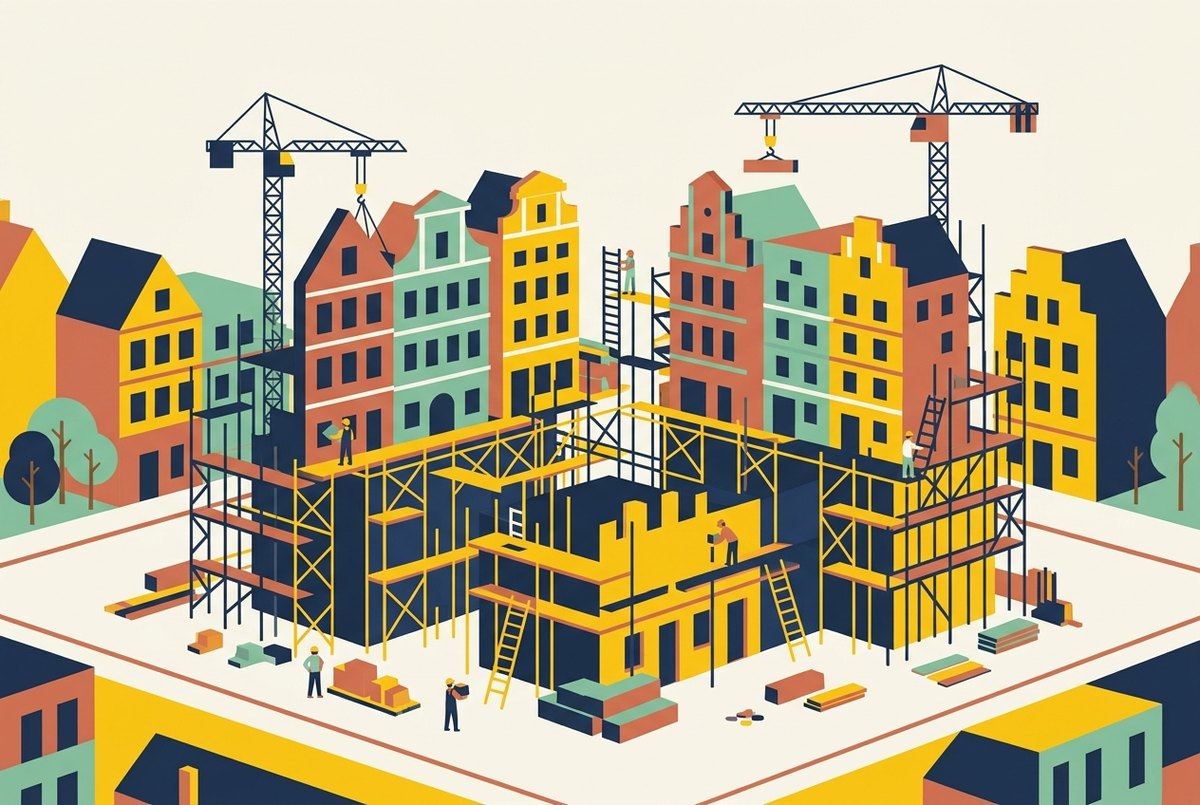
The experience of post-war Warsaw, which was almost completely destroyed during World War II, is one of the largest and most successful examples of urban reconstruction in world history. This case demonstrates how a nation can not only recreate lost historical heritage from the ruins, but also conceptually rethink urban space, making it more spacious and convenient, which is extremely relevant for planning the future of contemporary Ukrainian cities.
The Restoration Dilemma and the Creation of a Unified Institution
After the end of hostilities, the scale of destruction in the Polish capital was so catastrophic that the state leadership faced an extremely difficult choice. There was a very real possibility of leaving the ruins as a monument to the tragedy and moving the capital to another, significantly less affected city. Most residential buildings, bridges, industrial enterprises, infrastructure facilities, and historical monuments of left-bank Warsaw had been destroyed by targeted demolitions and massive fires following the suppression of the city uprising. However, the decision to rebuild Warsaw on its historical site carried profound psychological and political significance—the city had to rise from the ashes as undeniable proof of the state's resilience and indomitability.
To coordinate this unprecedentedly massive process, a special institution was established—the Capital Reconstruction Bureau. This body brought together the best architects, urban planners, engineers, sociologists, and historians. The Bureau developed a comprehensive strategy that categorically rejected the idea of blindly copying the entire pre-war city. Instead, a flexible, combined approach was chosen: it was decided to recreate the historical core with maximum accuracy to preserve national identity, while other districts were planned to be developed according to entirely new urban principles, responding to modern challenges and the needs of the population.
Detailed Reconstruction of the Historical Core
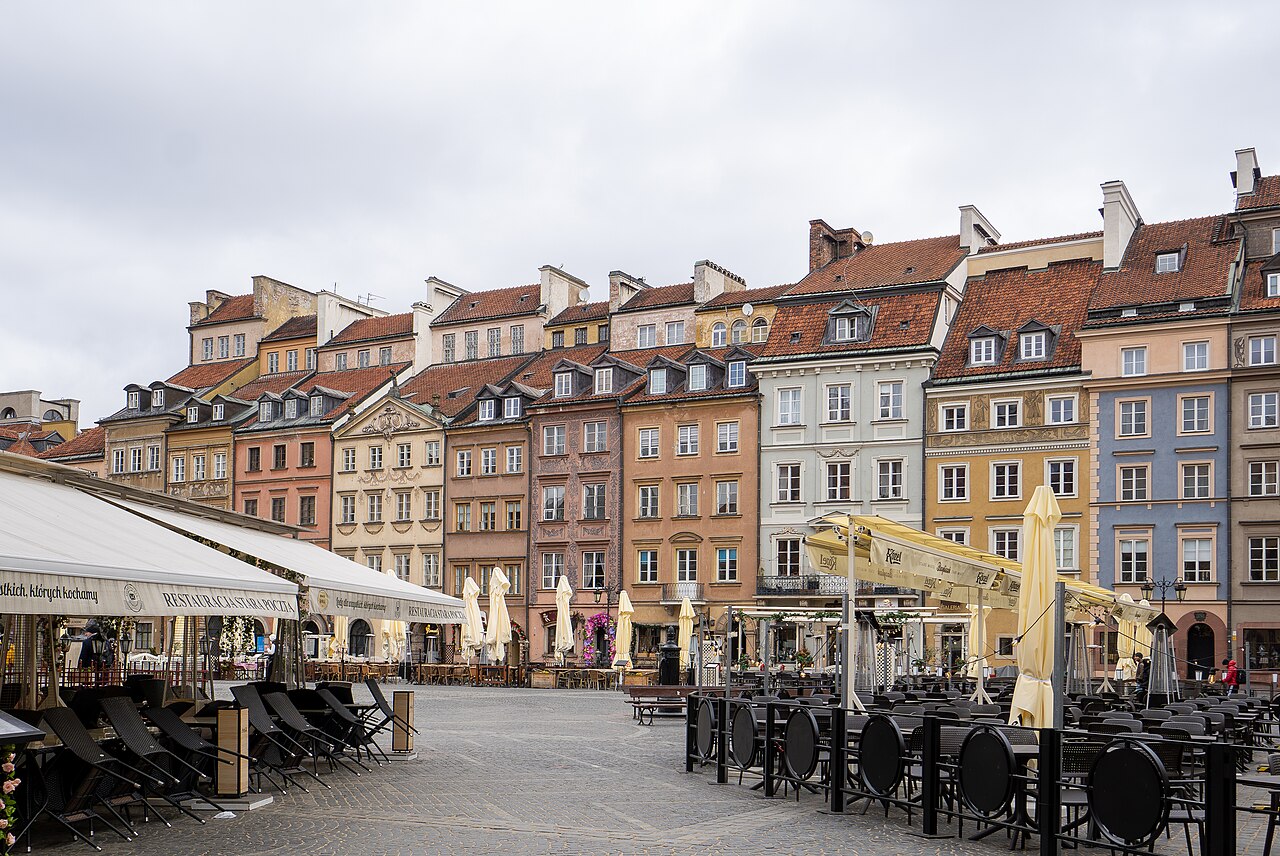
The restoration of Warsaw's Old Town and adjacent historical streets became a restoration project unprecedented in the world. Specialists faced a total lack of original architectural blueprints and were forced to rely on any available visual and documentary materials. Surviving wall fragments, old photographs, pre-war inventories, postcards, and even sketches by architecture students proved useful. Detailed 18th-century cityscapes by famous painters served as an exceptionally important source of information, helping to recreate the facades of historic townhouses with striking precision.
This process required immense manual labor and the meticulous sorting of rubble at the site of the ruins. Original bricks, surviving portals, fragments of stucco moldings, and wrought-iron decorative elements recovered from the debris were carefully integrated into the new walls. Ordinary residents joined the debris-clearing efforts en masse, turning the reconstruction into a genuine nationwide solidarity movement. This scrupulous and unifying approach made it possible to preserve the authentic spirit of the old city despite it physically being built anew. Eventually, these unprecedented efforts received the highest international recognition: Warsaw's historic center was inscribed on the UNESCO World Heritage List as an exceptional example of the total reconstruction of destroyed cultural heritage.
Modernization and Correcting Past Urban Planning Mistakes
While the Old Town was slowly regaining its historical appearance, the rest of Warsaw was designed as a modern, functional metropolis. The pre-war city had suffered severely from extremely high building density, narrow streets, a critical shortage of green spaces, and poor sanitary ventilation in residential areas. Total destruction, tragic as it sounds, gave the city a unique opportunity to correct these fundamental spatial flaws.
The new master plan envisioned the construction of new wide transport arteries that significantly improved urban logistics and connectivity between various districts, relieving the historical center of heavy transit traffic. Instead of dark and cramped enclosed courtyard blocks, new residential complexes were built with spacious courtyards, much better insolation, and direct access to social infrastructure. Significant attention was paid to creating new parks and public gardens, as well as developing the Vistula River embankments, harmoniously integrating nature into the urban environment. Thus, Warsaw did not merely restore its pre-war potential, but became a significantly more comfortable and healthier city to live in.
Lessons for Ukrainian cities
- Balance between heritage preservation and modernization. One should not strive to rebuild every street in its pre-war form; historically valuable sites require meticulous restoration, whereas destroyed generic or industrial areas are best redesigned according to modern standards of comfort and sustainability.
- Creation of a single coordinating center. The success of large-scale recovery depends on an effective professional institution that brings together experts across various fields to formulate a cohesive vision for the city's development, preventing chaotic and uncoordinated piecemeal development.
- Utilization of all data recording tools. High-quality reconstruction is impossible without baseline data; therefore, Ukrainian communities must actively invest now in creating 3D models, digital archives, and detailed architectural surveys in case of potential damage.
- Community involvement and the symbolic value of reconstruction. Restoring iconic public spaces and involving residents in debris removal or planning processes has a powerful psychological effect, restoring people's sense of home, uniting society, and offering real hope for the future.