
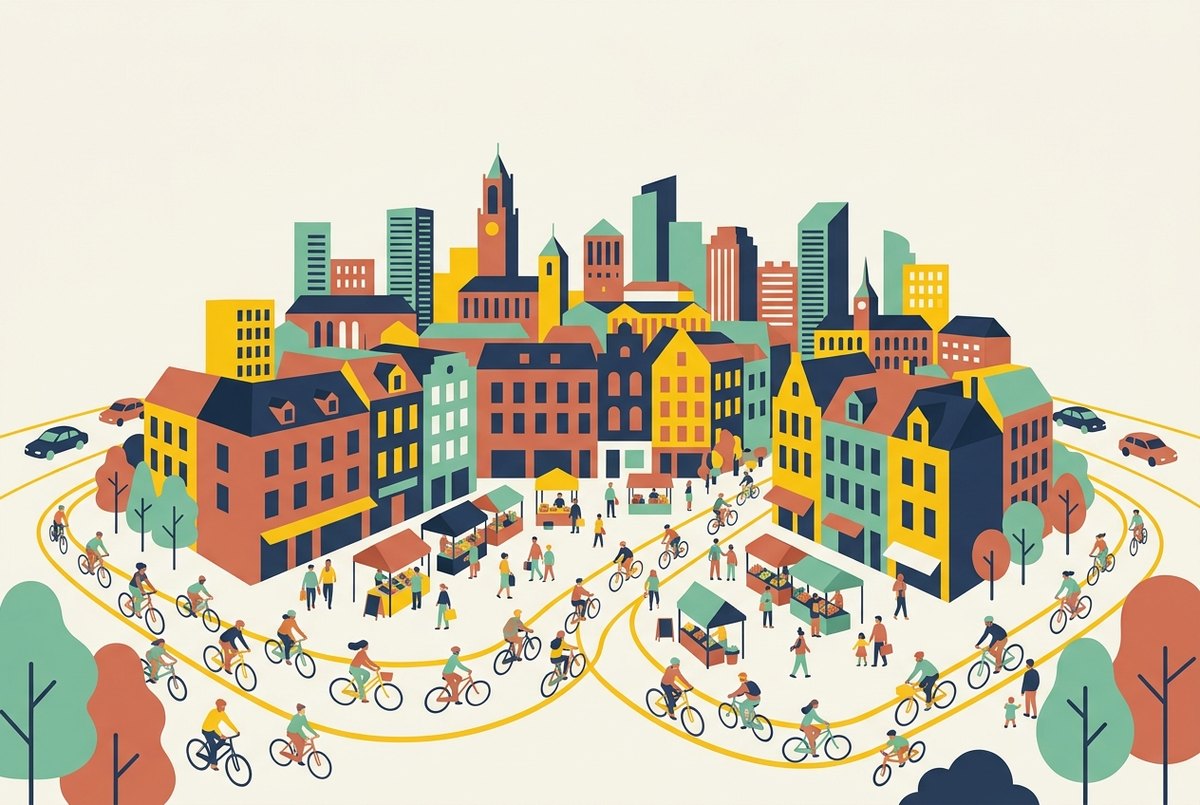
In the second half of the twentieth century, the Dutch city of Groningen took a radical step, permanently changing its traffic patterns and effectively freeing its historic center from through traffic overnight. This case, unprecedented in urban planning practice, proves that bold governance decisions—even despite inevitable initial public resistance—can transform exhaust-filled streets into safe, economically thriving, and comfortable spaces for people.
How the idea to rethink the space emerged
In the postwar decades, Groningen, like most European cities, faced rapid and massive motorization. Compact historic streets that had taken shape over centuries quickly filled with private cars. Main squares turned into solid open-air parking lots, noise levels and air pollution constantly increased, and the safety of pedestrians and cyclists was compromised. The urban space became uncomfortable for living and spending leisure time.
The conventional solution of that era would have been to widen roadways, construct new interchanges, and demolish parts of the historic urban fabric to accommodate car infrastructure. For Groningen, however, the loss of historic heritage was entirely unacceptable. Instead, the local government, comprised of progressive politicians, decided to take a different path—to change the very logic of getting around the city. The main goal was to eliminate through traffic from the center and grant indisputable priority to pedestrians, cyclists, and public transit. This required a fundamentally new approach to traffic management.
The sector model: the essence of the traffic plan
The Traffic Circulation Plan became the foundation of the new policy. Its key and most innovative concept was the division of Groningen's central area into four separate sectors resembling slices of a pie.
Under the new plan, motorists were strictly prohibited from driving between these sectors directly through the historic center. To get from one zone to another, drivers now had to leave the center, take a dedicated bypass ring road to the desired sector, and only then enter. In other words, cars retained access to the center for deliveries, business operations, or reaching homes, but through traffic lost all practical sense, becoming long and inconvenient.
At the same time, no barriers were created for cyclists, pedestrians, and city buses. They were permitted to freely cross sector boundaries in any direction. This layout made cycling or walking through the center significantly faster, more attractive, and more convenient than driving. The city made a deliberate choice in favor of active mobility, creating conditions in which using a car for short trips simply became irrational.
The night that changed the city, and the aftermath
The plan was implemented remarkably quickly and decisively. The transformation required neither months of construction work nor the building of new thoroughfares. Overnight, municipal crews simply installed new road signs, applied corresponding street markings, and placed physical barriers—concrete planters and bollards—that reliably blocked through traffic at the sector boundaries. The next morning, residents woke up in a city with a completely new transportation reality.
Naturally, such drastic and uncompromising changes faced serious backlash. Local shop owners and restaurateurs staged protests. They feared that the lack of direct car access would cause a loss of customers, a drop in sales, and the decline of the city center. During the first few weeks, a certain amount of confusion indeed reigned in the streets while drivers adapted to the new routes.
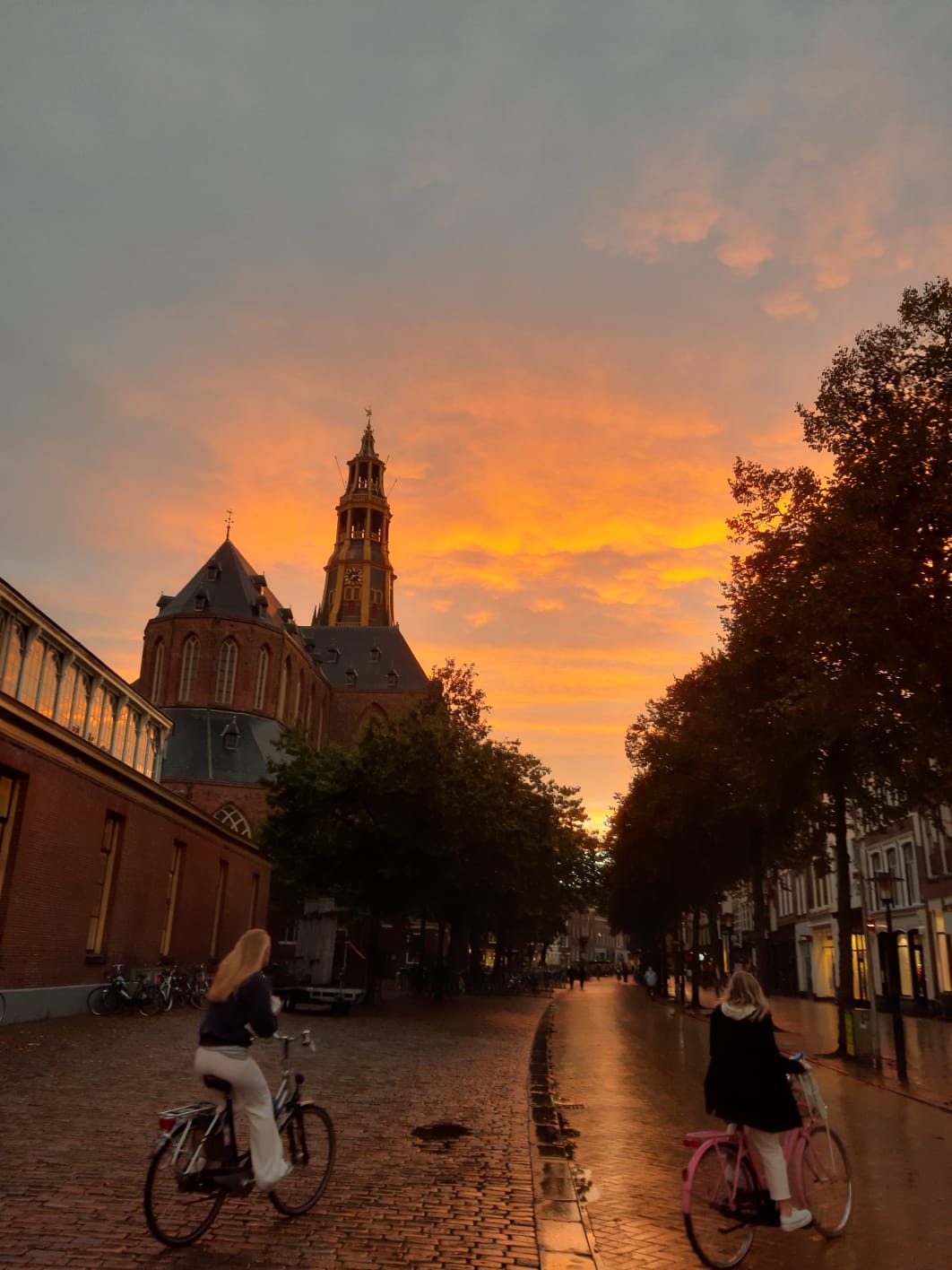
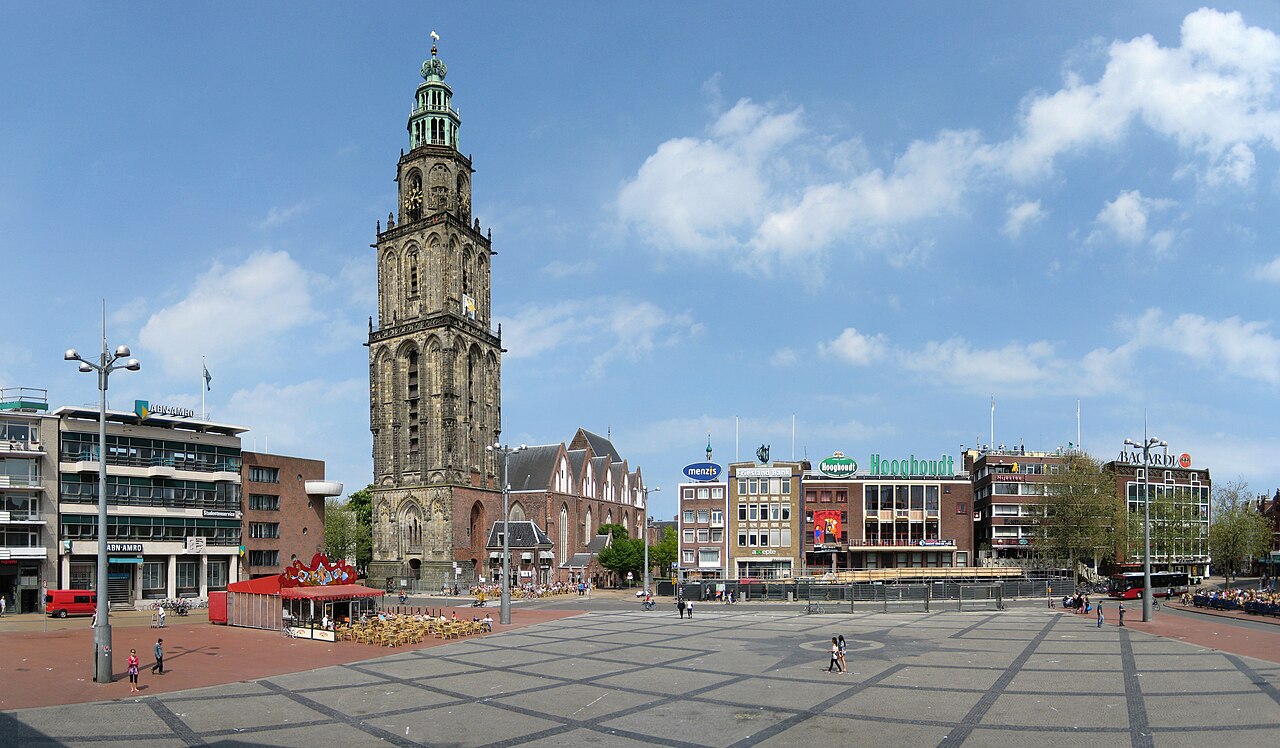
However, time proved the apocalyptic forecasts wrong. Freeing the streets from the constant flow of cars, noise, and exhaust fumes turned Groningen's center into an extraordinarily appealing space. People began spending more time there, strolling with children, and enjoying cafes in peace. This had a positive impact on retail: businesses not only avoided harm but received a new boost for growth thanks to increased foot traffic. Over the years, Groningen solidified its reputation as one of the most liveable cities in Europe, where the bicycle became the dominant mode of daily transport.
Lessons for Ukrainian cities
- Political will is decisive. Radical changes to a transportation system always face initial resistance; therefore, city leadership must be prepared to take responsibility for unpopular decisions for the sake of long-term outcomes.
- Spatial design works better than outright bans. Groningen did not ban cars entirely; it simply redesigned the traffic configuration so that driving through the center became inconvenient and illogical for motorists themselves.
- Pedestrian zones stimulate the local economy. Contrary to business fears, safe, quiet, and clean public spaces attract far more people who are willing to linger and spend money at local establishments.
- Effective solutions can be fast and inexpensive. Fundamentally altering travel behavior and redistributing traffic flows does not necessarily require building costly interchanges—sometimes smart changes to road signs and simple physical barriers are enough.